Underwater drones come in two kinds. An AUV swims a planned mission on its own; an ROV is flown live by a pilot through a tether. Harbour and port security usually needs both, for different jobs.
The difference in one table
| AUV (autonomous) | ROV (remotely operated) | |
|---|---|---|
| Control | Runs a pre-set mission on its own | Flown live by a pilot |
| Connection | No tether; position reported on surfacing | Tether carries power, video and commands |
| Data | Logged on board, reviewed after recovery | Live video and sensor data |
| Strength | Covers ground: survey lines and sweeps | Looks closely: inspection, identification, recovery |
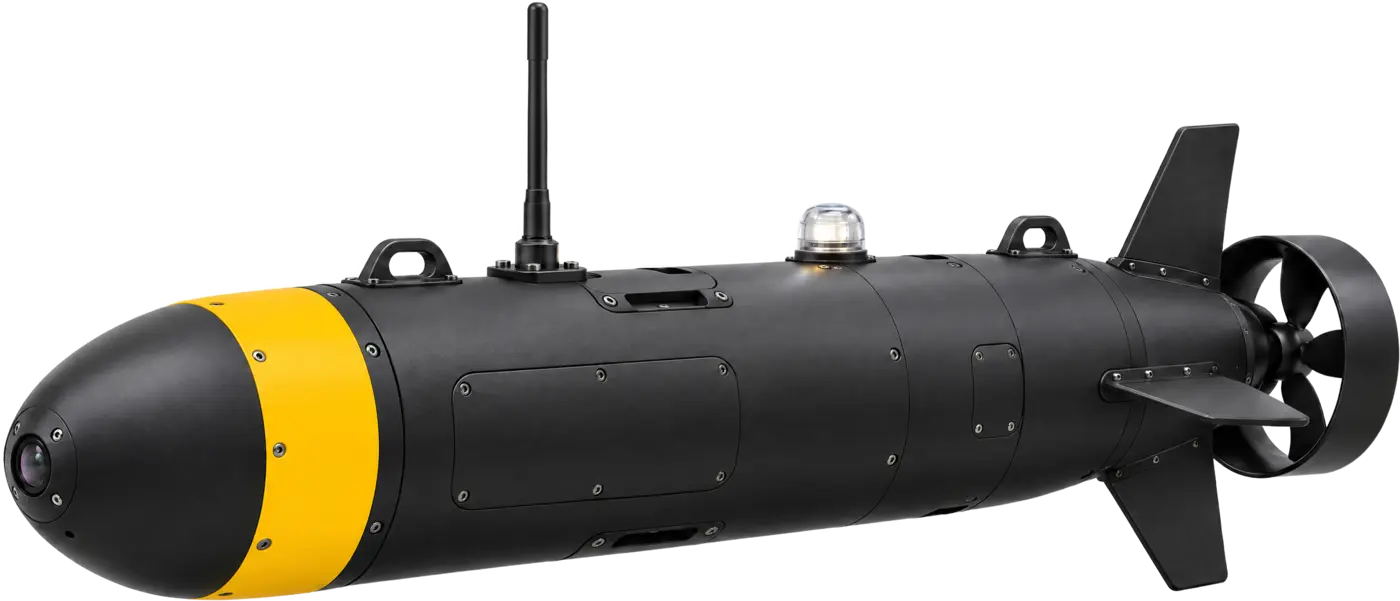
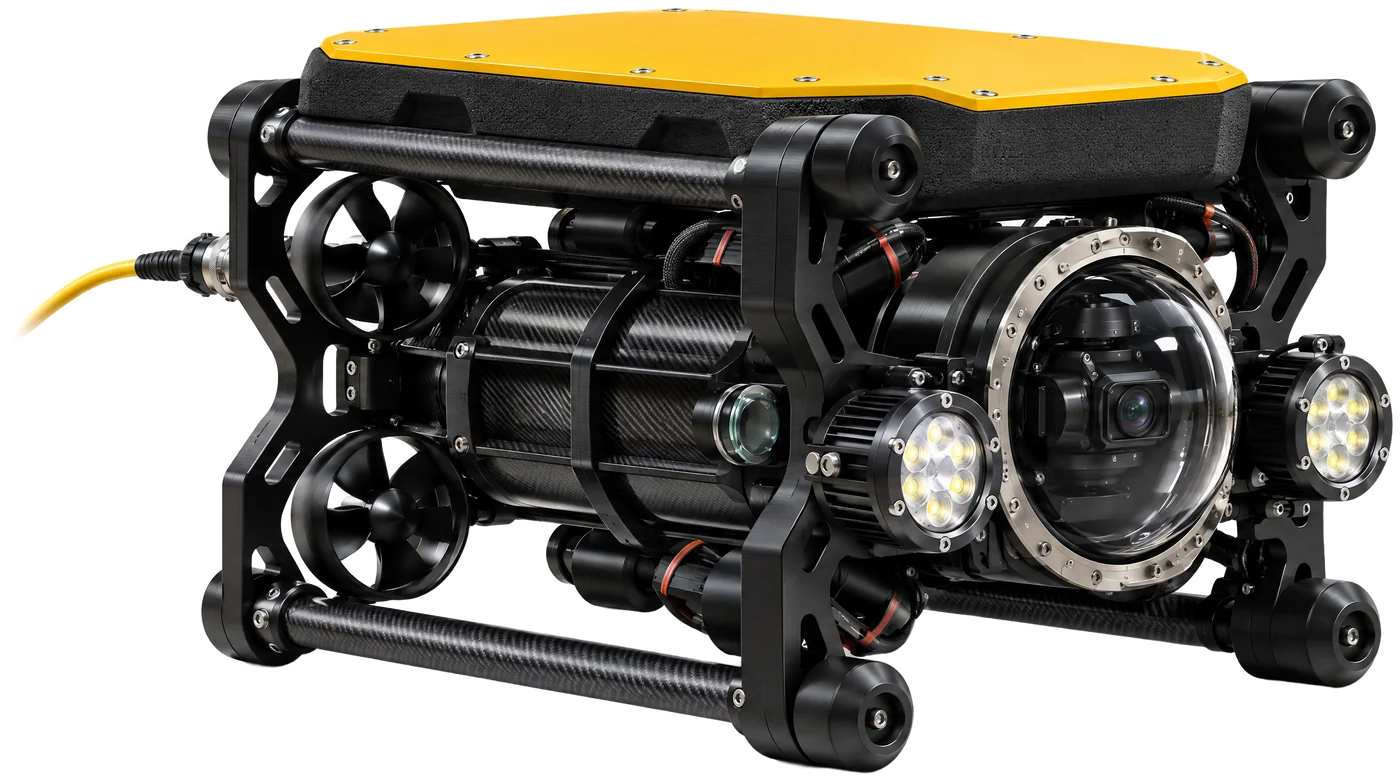
| Star INXS | Fangtooth MK1: 200 m, 6 h, 8 kn, 7 mission profiles | Thresher MKI: 300 m, 8 h, 10 kn, 4K 30× camera |
Where an AUV fits
An AUV is the efficient choice for repetitive coverage: sweeping approach channels, surveying the seabed along a planned grid, or patrolling a fixed route on a schedule. It works without a support boat holding a tether, so one team can run several missions in a shift.
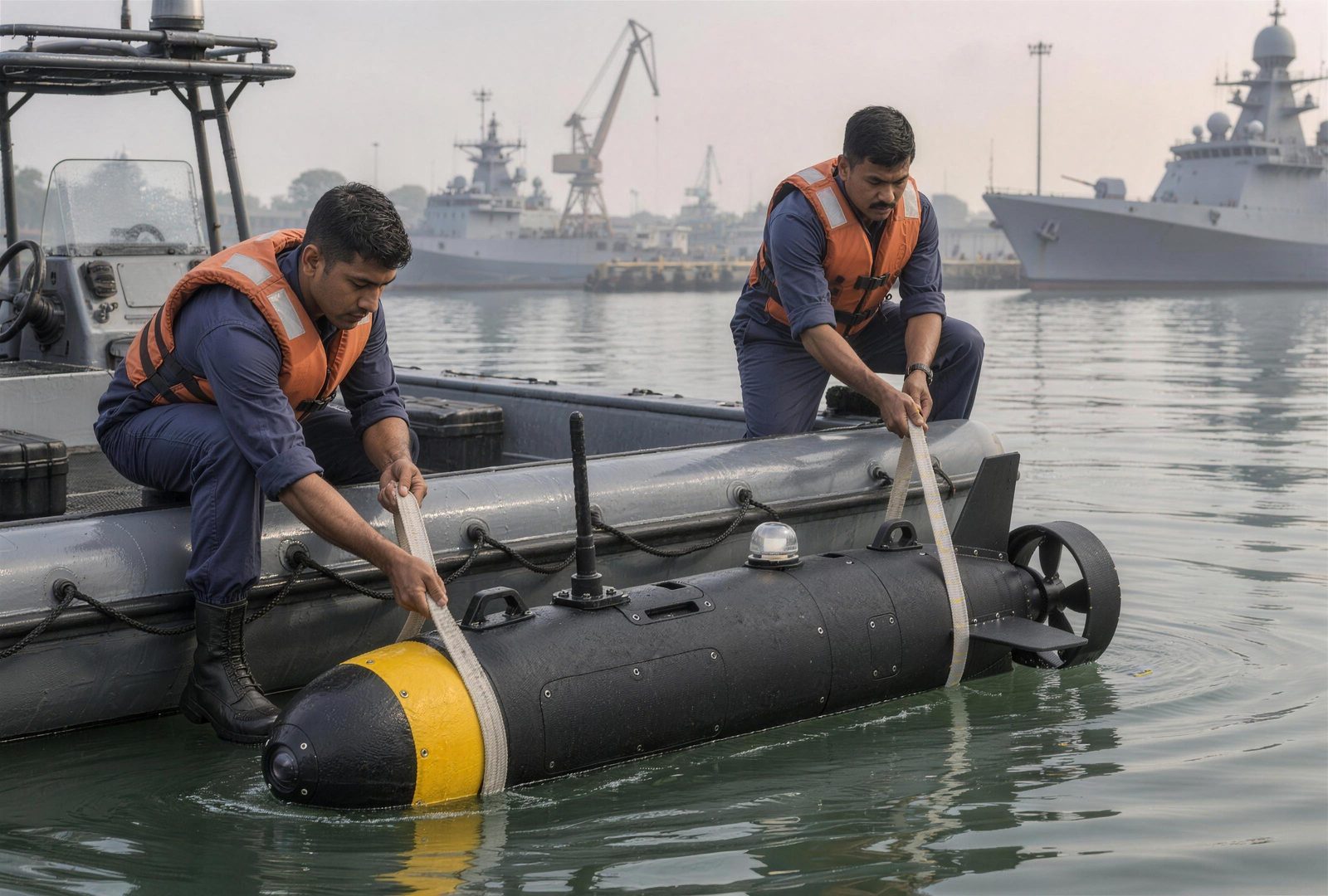
Fangtooth MK1 is a torpedo-form AUV rated to 200 m, with up to 6 hours of endurance at 4 knots, seven preset mission profiles, a 2 kg payload and a LoRa GPS position report for recovery.
Where an ROV fits
An ROV is the tool when a person needs to see and decide in real time: checking a ship's hull, inspecting a jetty pile or pipeline, identifying an object found by a sweep, or recovering it.
Thresher MKI is an observation-class ROV rated to 300 m, with an 8-hour continuous dive, a 4K camera with 30× optical zoom, side-scan sonar, USBL tracking and a fibre-optic tether.
Using both together
- The AUV sweeps the channel or berth on a planned pattern and logs what it finds.
- The team reviews the data and marks contacts worth a closer look.
- The ROV dives on each contact to identify it on live video, and recovers it if needed.
What to specify
- Depth rating with margin over your deepest berth or channel
- Endurance at working speed, and battery change or charging time
- Sensors: camera resolution and zoom, lighting, sonar type and range
- Navigation and tracking underwater (DVL, USBL)
- Current limits: the speed and thrust needed to hold station in your tidal stream
- Launch and recovery from your boats or jetties
- Operator training and maintenance support