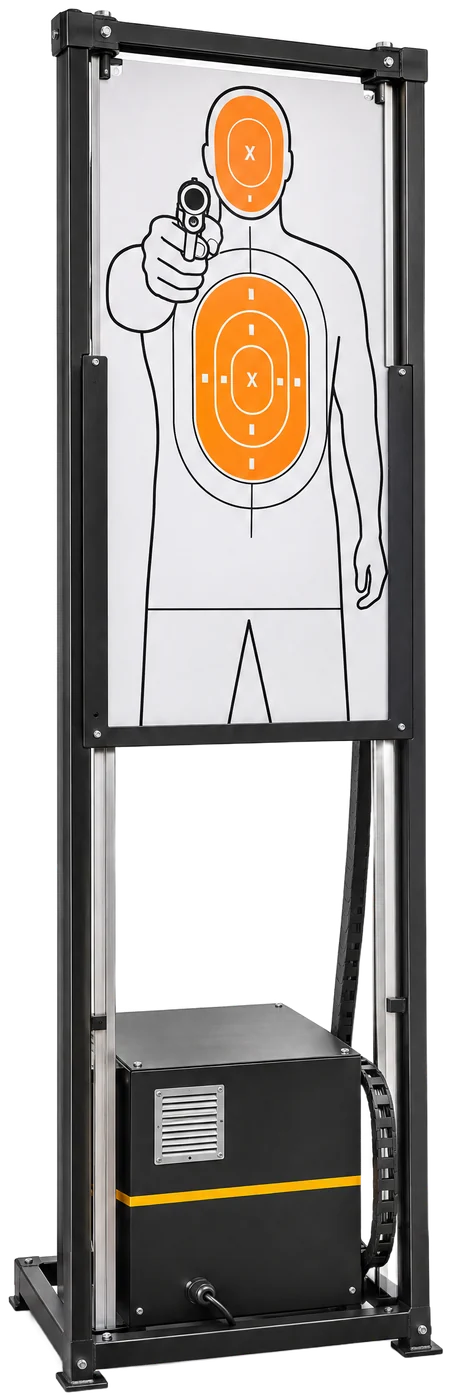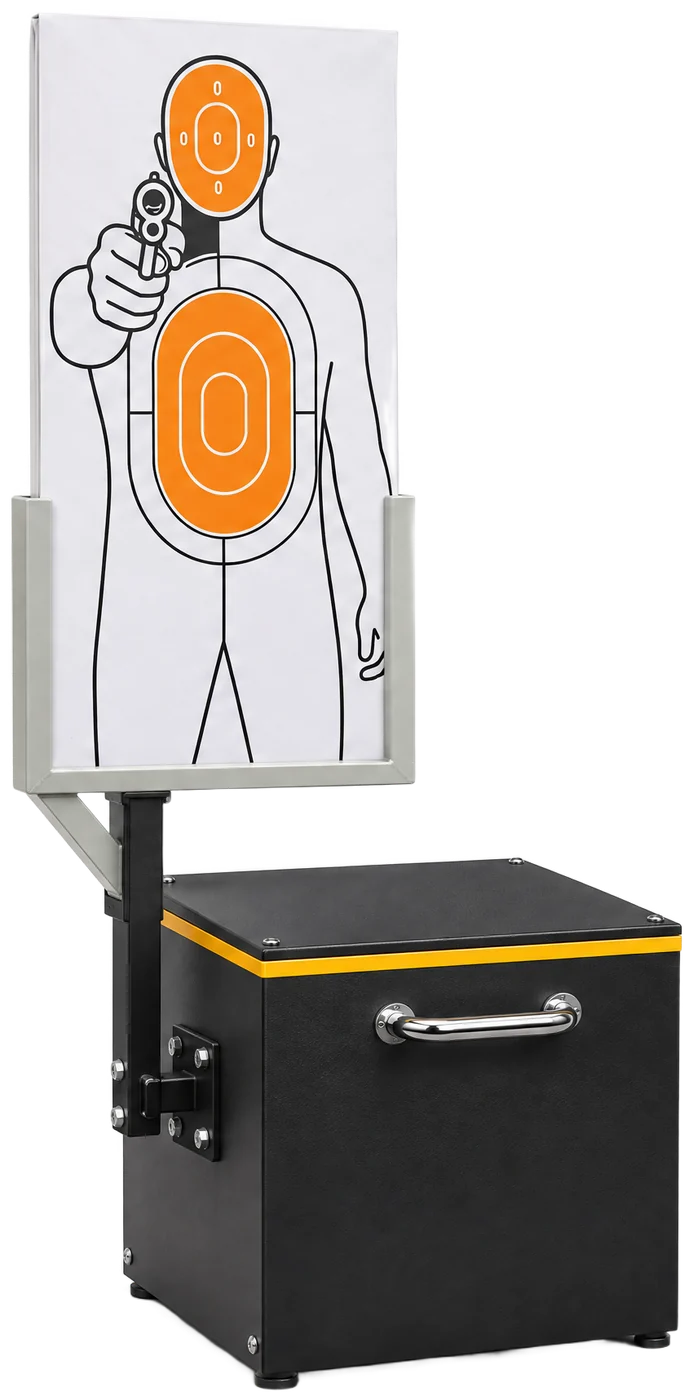
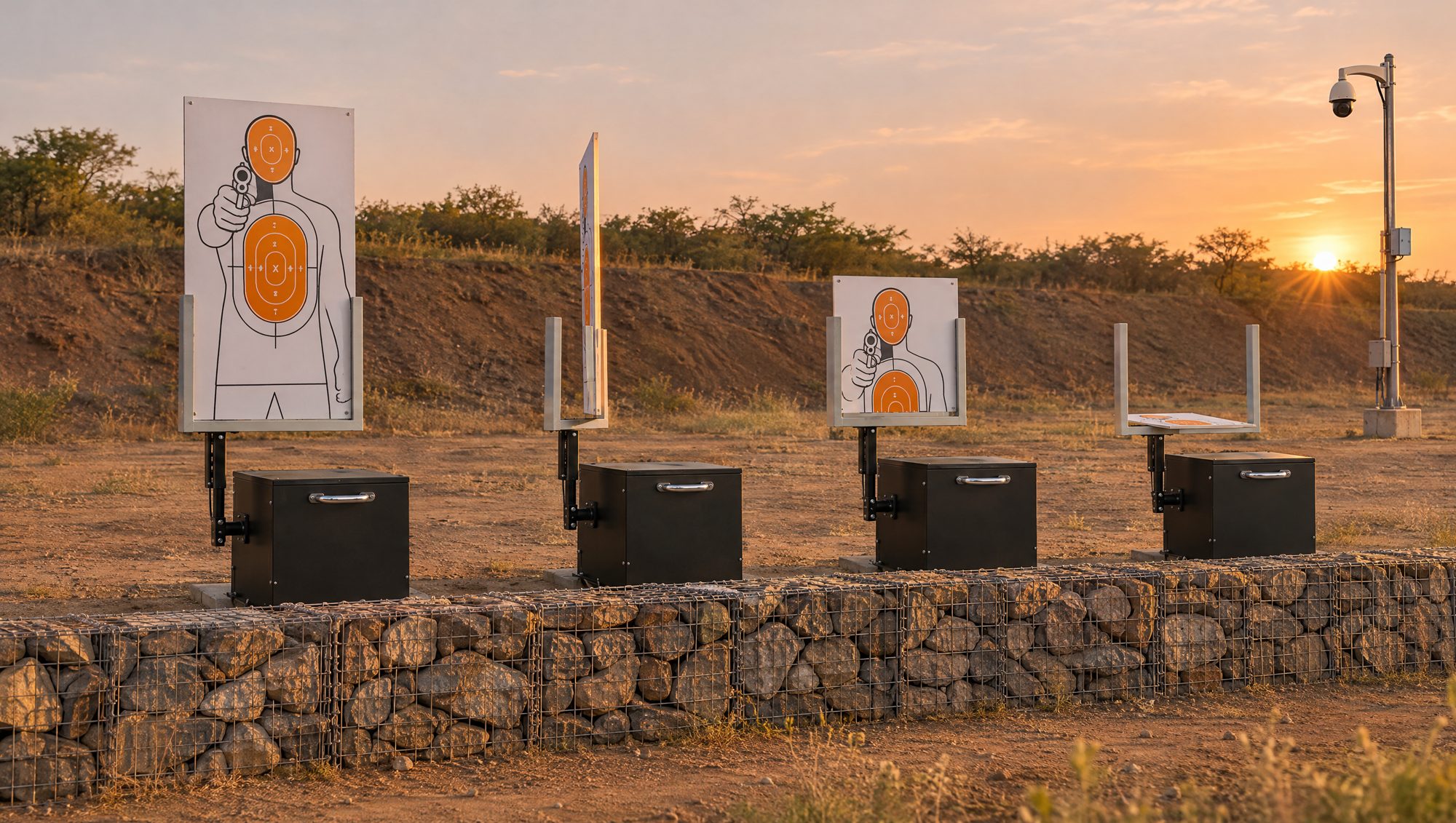
Pop-up targets make a range react: they appear, wait and drop, so the shooter has to find and engage them in time. The choice between single-function and multi-function targets depends on the training you run.
Side by side
| Single-function | Multi-function | |
|---|---|---|
| Movement | Vertical rise and fall on twin guide rails | Pop-up (0–90°), slicing and rotation on the central axis |
| Exposure | Timed exposure or fall on hit | Expose / hide in 2 s or less; programmable 1 s to 2 min; hold-up mode |
| Hits before hide | Fall on hit (acoustic sensor optional) | Programmable |
| Exercises | Timed exposures | React-on-hit turn-away, snapshot, timed; 7 targets together or one by one |
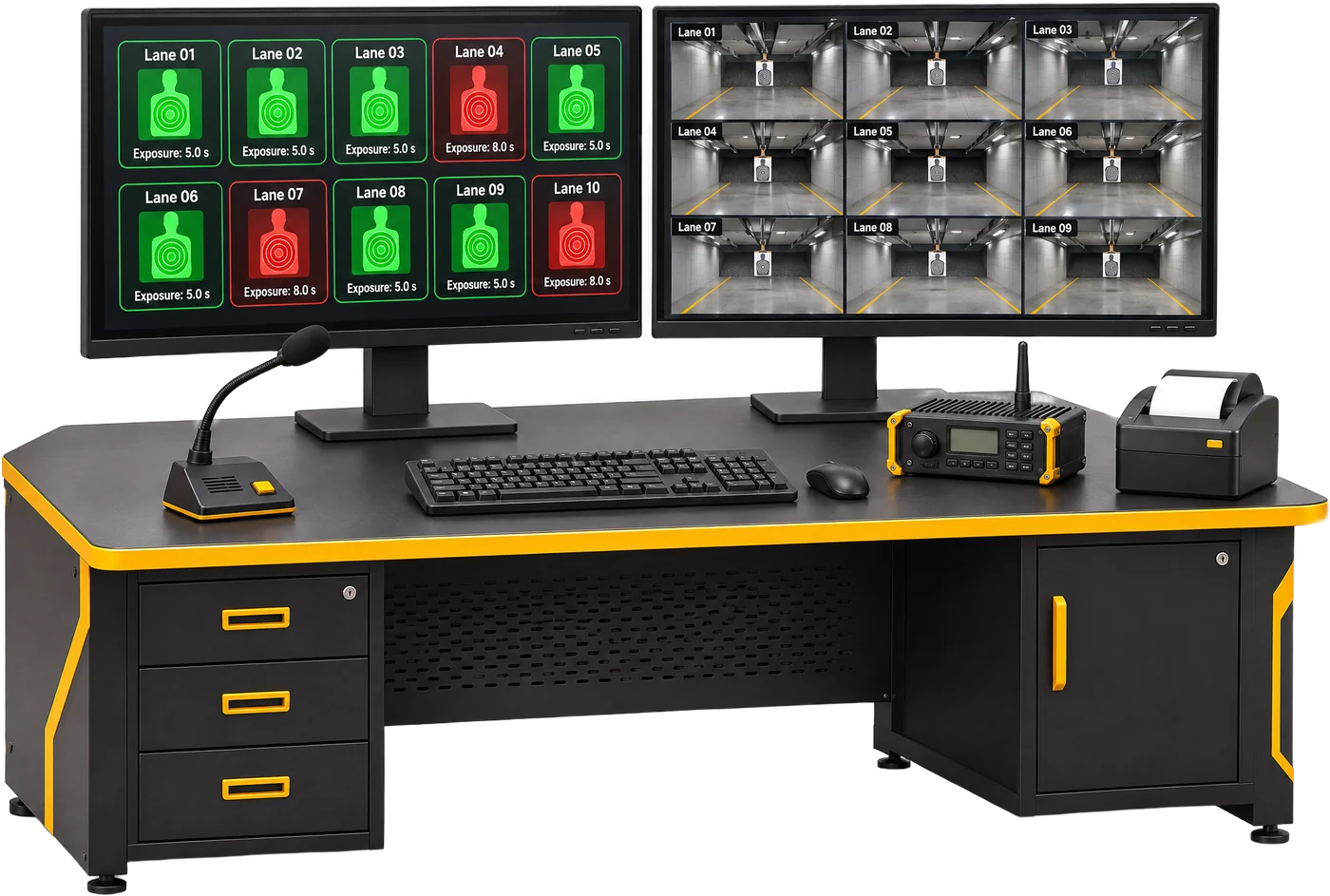
| Control | Handheld remote and 8-channel console | Same, plus the range PC up to 600 m away |
| Best for | Fundamentals and qualification shoots | Tactical, judgement and night drills |
When single-function is enough
For marksmanship fundamentals and standard qualification practices, a target that rises, holds for a set time and falls is all you need. The single-function target is simple, robust and runs on mains or battery power.
When to choose multi-function
Tactical training needs targets that behave less predictably. The multi-function target can pop up, slice or turn away when hit, run snapshot exercises and work in groups of up to seven. Add night illumination for low-light shooting and the acoustic hit sensor to count and store hits.
Add movement and control
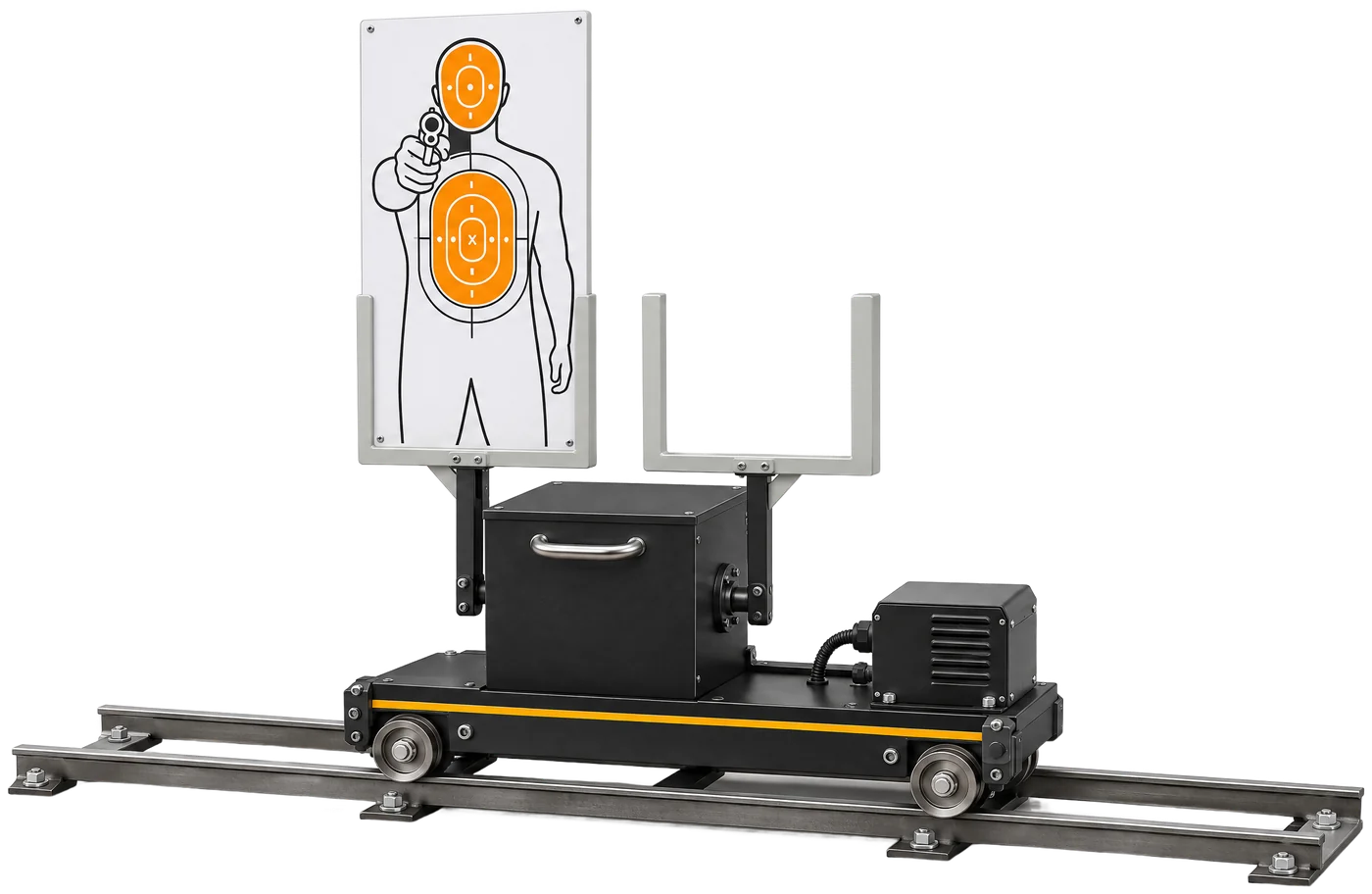
Mount the multi-function target box on a trolley track for moving-target drills at slow, medium or fast speed. Link everything to range control for lane status, exercise libraries, hit display, CCTV and reports.