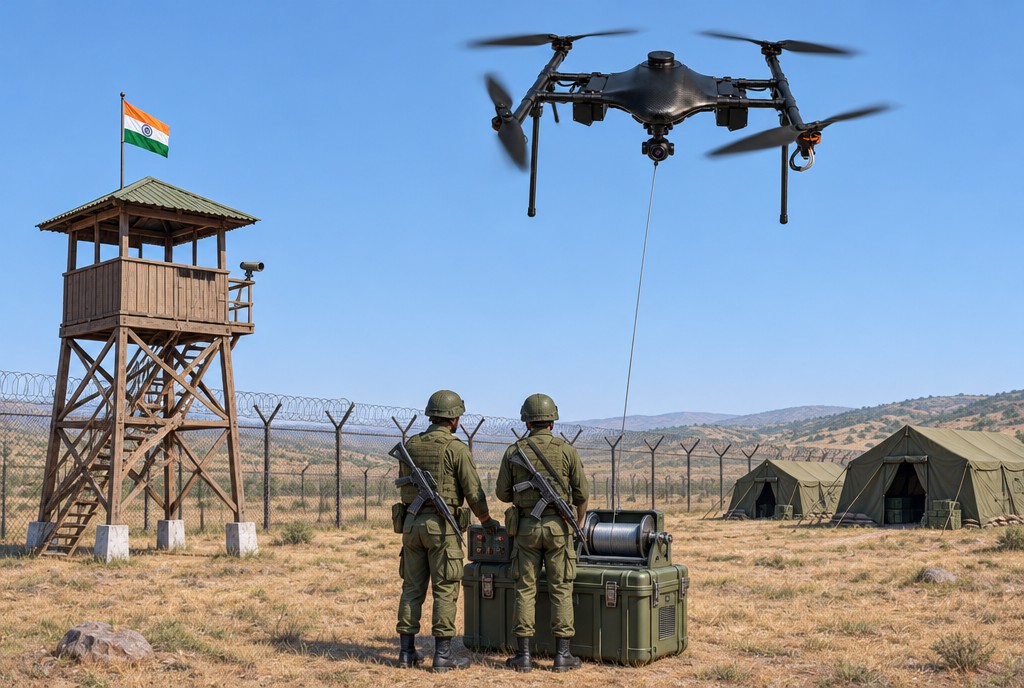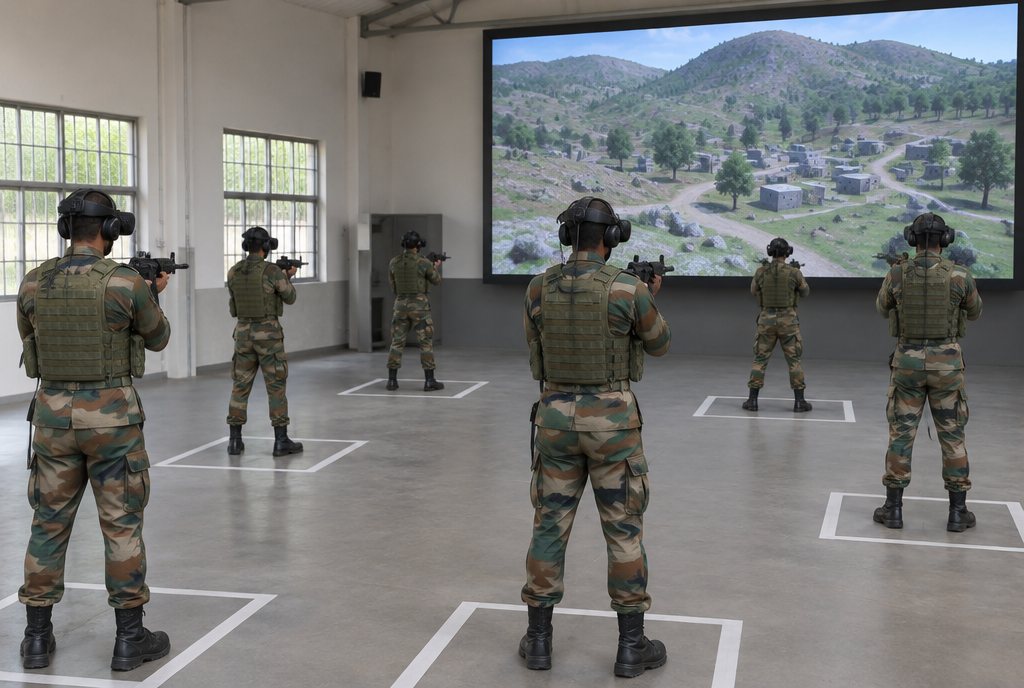
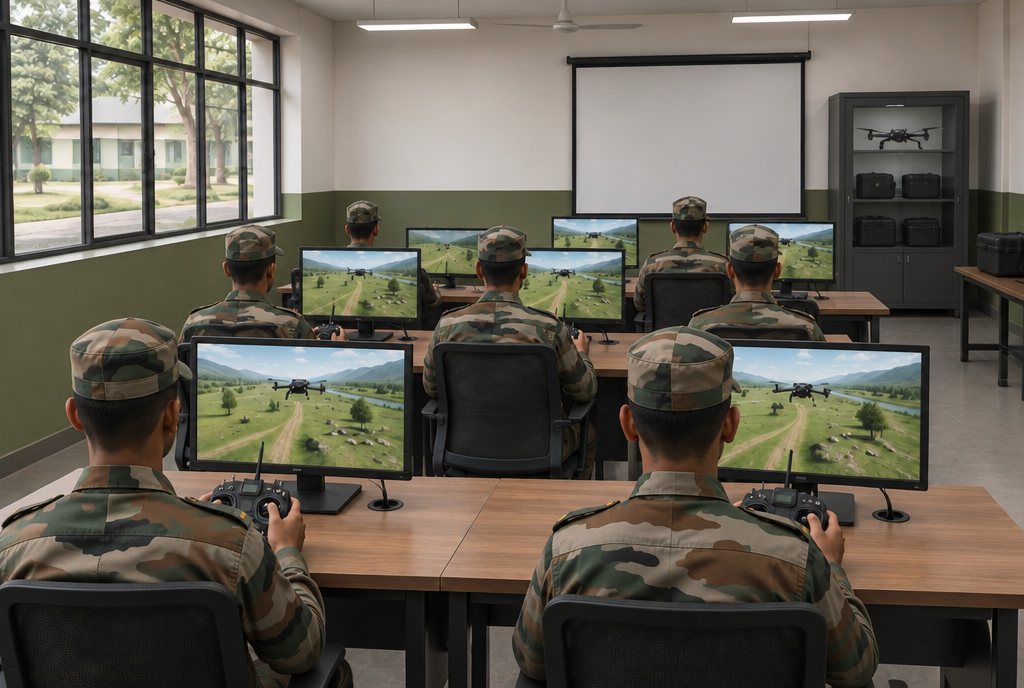
A new drone pilot will crash. It is better that the crash happens on a screen. A flight simulator lets trainees learn take-off, hover and landing, and later fast and precise flying, before they touch a real airframe, and it lets qualified pilots keep their skills between sorties.
What drone pilot training needs
A training course has to bring first-time pilots up safely and keep trained pilots current. DroneSim is built for both.
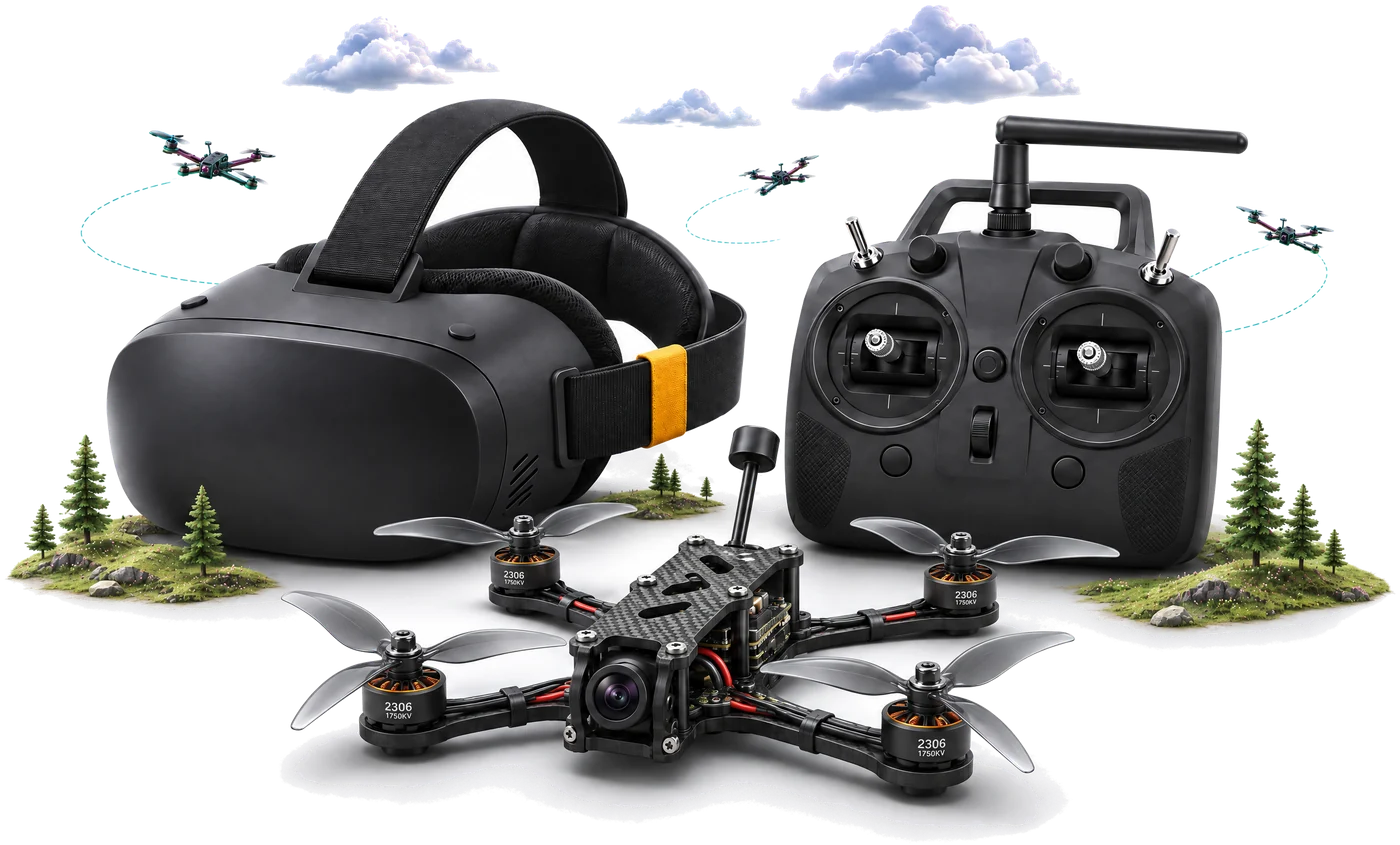
- Real sticks. Trainees fly a RadioMaster transmitter with throttle, pitch, roll and yaw, so stick skills are learnt on real controls.
- A path from basics to combat. Four training stages: open world, tutorial, race track and combat / dog chase.
- The basics first. The tutorial stage covers take-off, landing, hover, turns, climb and descent.
- Pursuit drills. SkyWar Combat puts several drones in the air, with enemy drones that break and turn to get away.
- A score for every flight. Path precision, checkpoint splits, stability index, battery efficiency, reaction time, a letter grade and a leaderboard.
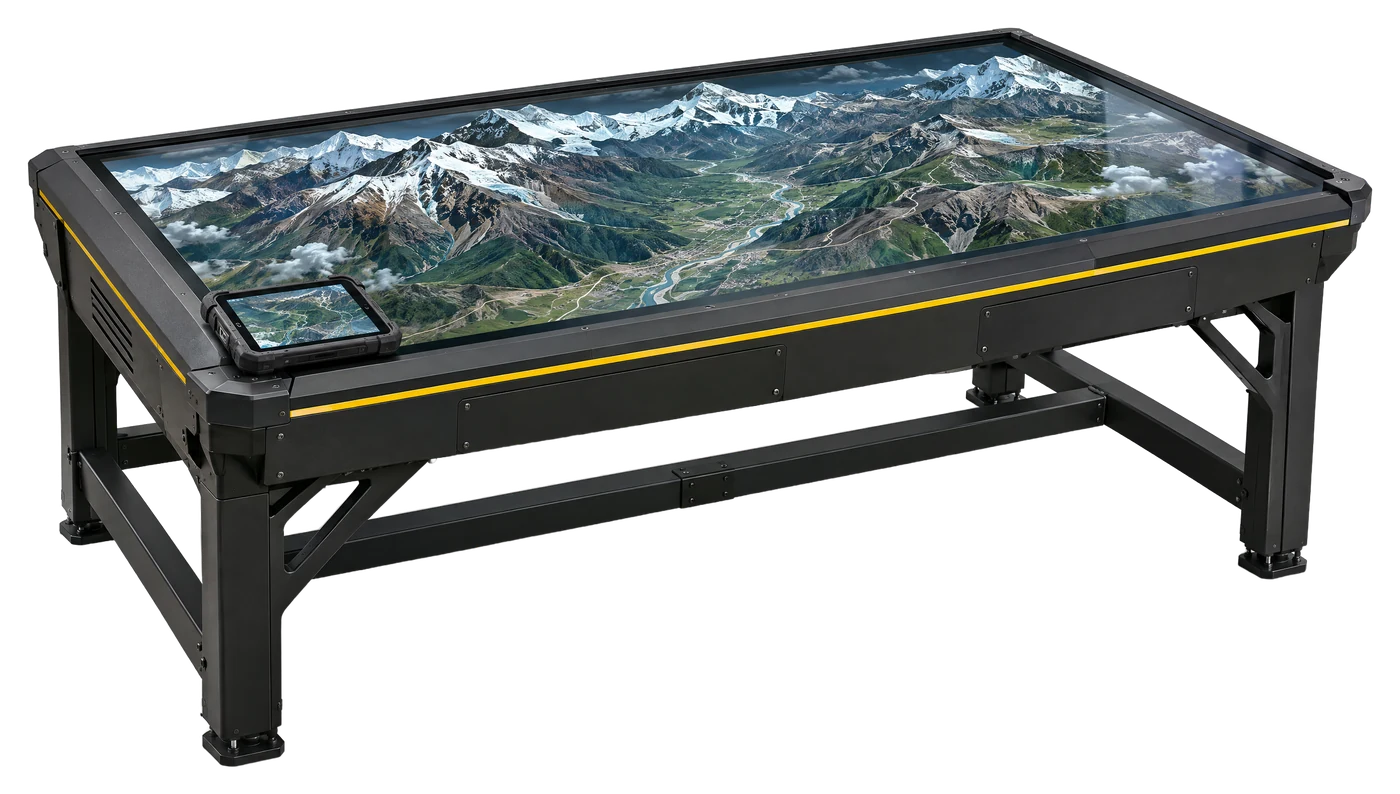
- One station or a lab. The same system works as a single station or as a full drone lab, in a classroom or a unit.
What to specify
| Item | Why it matters | DroneSim |
|---|---|---|
| Packages | Match the course level | Open World, Training Stages, SkyWar Combat |
| Training stages | Progression for the trainee | Open world, tutorial, race track, combat / dog chase |
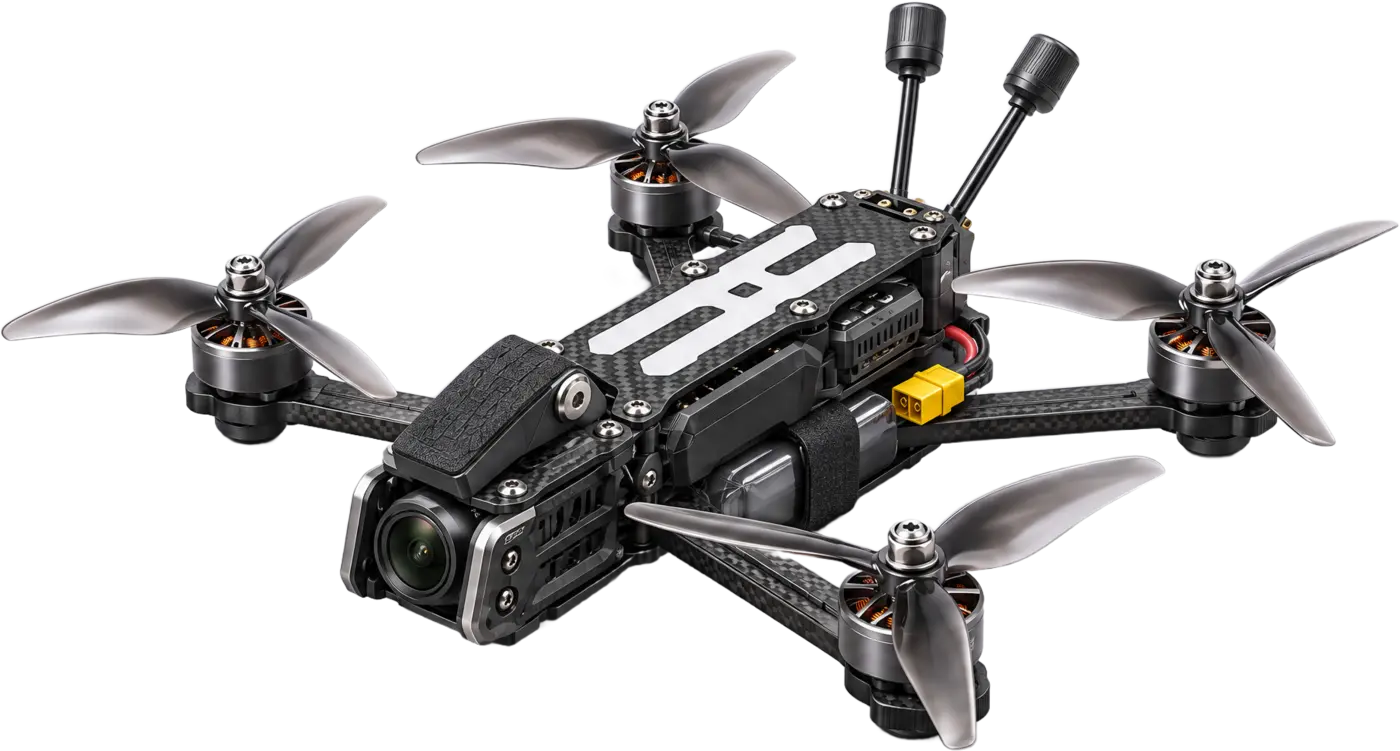
| Drone profiles | Handling from beginner to advanced | Stable, Racer, Combat |
| Controller | Skills learnt on real sticks | RadioMaster flight controller / transmitter; model fixed at integration |
| Other input | Flexibility in the classroom | Gamepad, keyboard and mouse |
| Physics | How true the handling is | Rigid-body; per-motor thrust from RPM and prop pitch; battery sag; drag |
| Wind and ground effect | Practice in difficult air | Wind gusts 0-12 m/s; ground effect below 1 m AGL |
| Scoring | Objective assessment | Path precision, checkpoint splits, stability index, battery efficiency, reaction time, letter grade, leaderboard |
| Display | Classroom or immersive | Monitor (standard); OpenXR VR headset (option) |
| Computer | What each station runs on | Intel Core i5 or equivalent, 16 GB RAM, 128 GB SSD, NVIDIA GT 1030 4 GB or better |
| Delivery | What arrives | Software, computer, controller and peripherals configured as one ready-to-operate system |
How a course uses it
- Pick the package. Open World for first flights and free practice, Training Stages for induction courses, SkyWar Combat for advanced pilots and pursuit drills. Each package adds to the one before.
- Set up the stations. Each system arrives configured and ready to operate, with the computer, the controller, the monitor and the cables.
- Start in the open world. Trainees take off and fly at their own pace, with no fixed route and no fail state.
- Teach the basics. The tutorial stage takes them through take-off, landing, hover, turns, climb and descent on the Stable profile.
- Add speed and precision. The race track tests speed control, timing and precision through turns and obstacles on the Racer profile.
- Run pursuit drills. In the combat / dog chase stage the trainee picks one enemy drone, stays on it and beats it.
- Review the scores. Use the letter grade, the checkpoint splits and the leaderboard to decide who is ready to move on.
Who it suits
DroneSim is built for work like this. It suits:
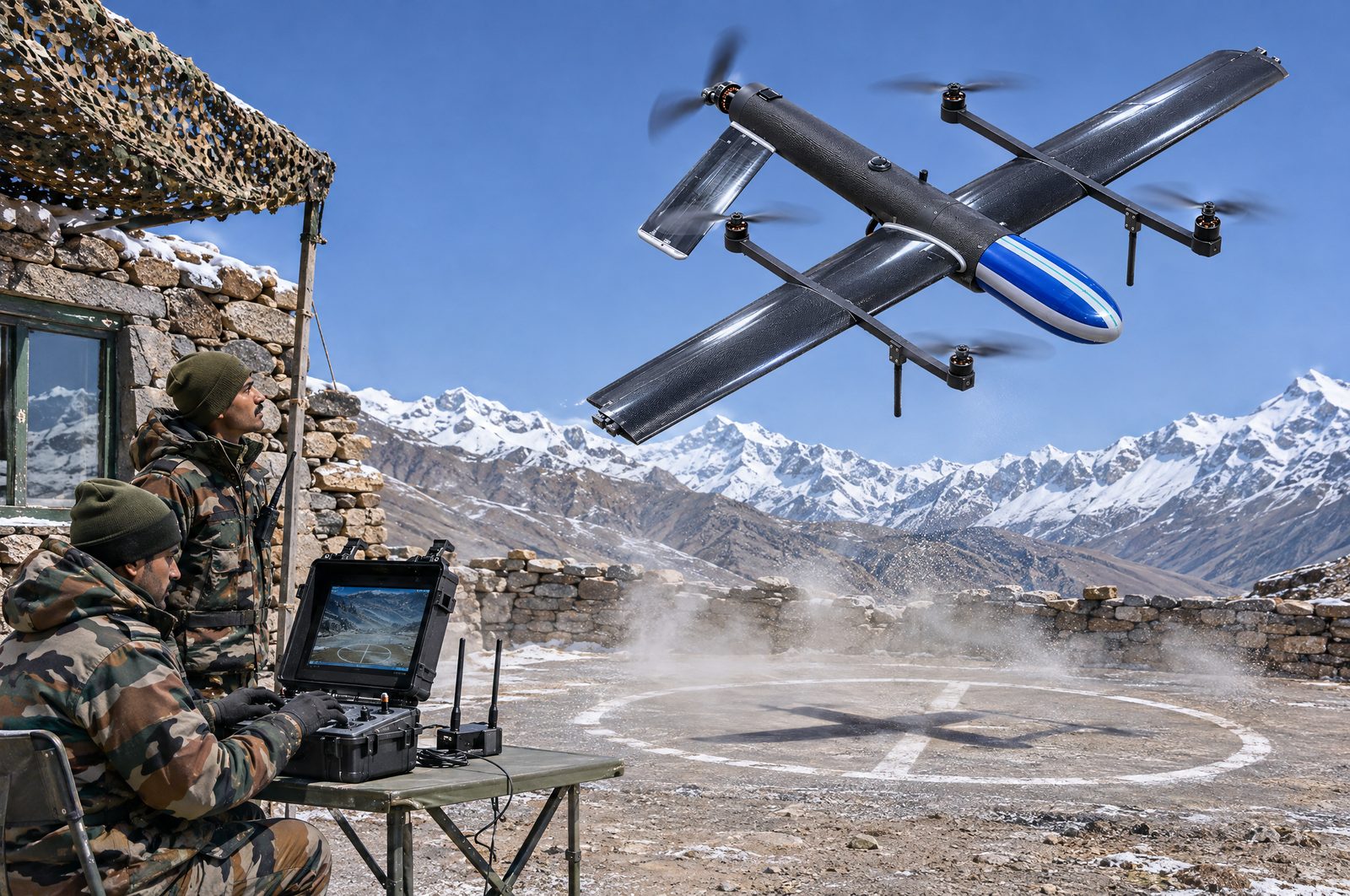
- Army, Navy and Air Force units and training establishments that induct and train drone pilots.
- CAPF such as CRPF, BSF, ITBP, SSB and CISF, and Assam Rifles, for drone operator training.
- NSG and special units that want pursuit and interception drills.
- State police drone units and police academies.
- Drone pilot schools and training institutes that want a classroom lab.
Buying it: manufacturer details, GeM and tenders
Star INXS designs and builds DroneSim in India and is certified to five ISO management-system standards. You can buy through GeM, an open or limited tender, a defence portal or a direct purchase order.
Our Tender & GeM desk shares OEM authorisations, technical compliance statements and bid documents written against your specification.
- Send the requirement. Attach your tender specification or RFP to the quote request and we respond against it.
- Ask for a budgetary quote. Prices depend on the configuration and the quantity, so tell us the site, the numbers and the options you need.