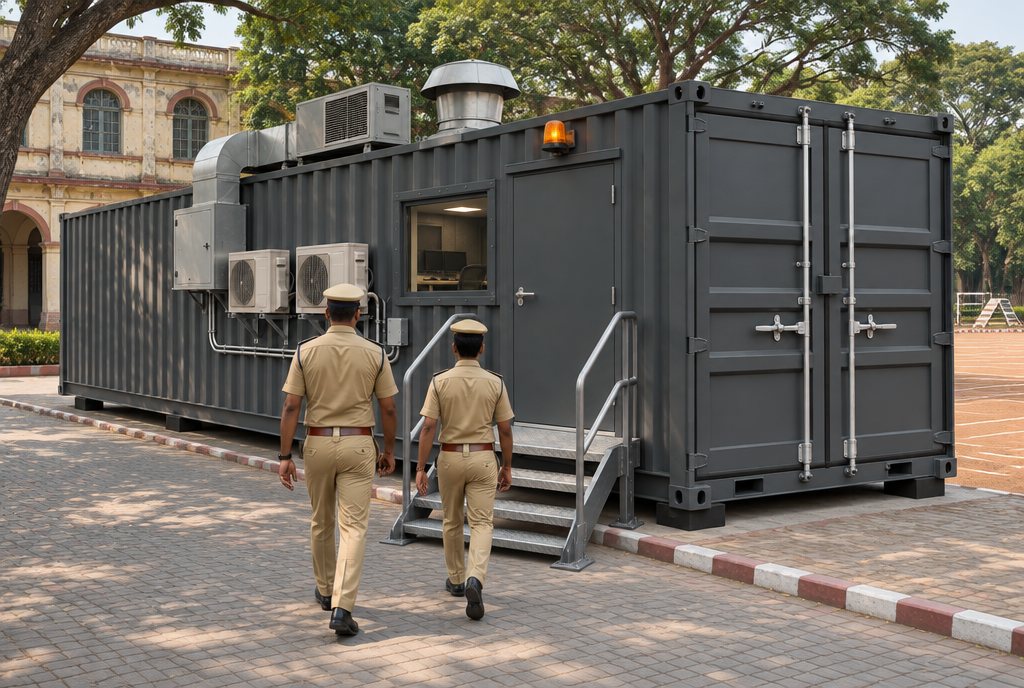
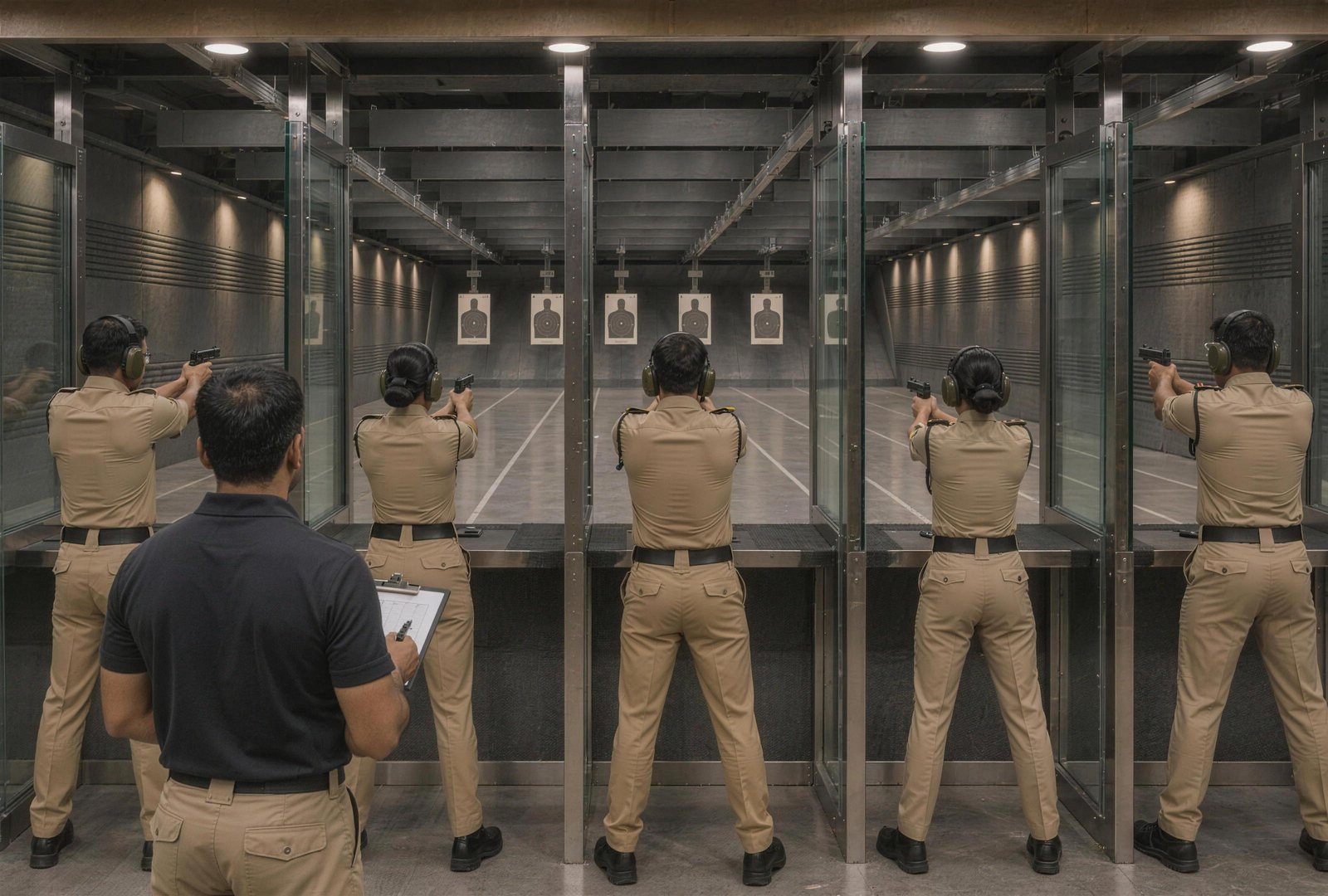
Police lines and CAPF camps are often inside towns, where there is no land for an outdoor range and its danger zone. An indoor range keeps every round inside a building, so firing practice can happen close to where people train and live, in any weather and on any shift.
What police and CAPF firearms training needs
A force has to put many people through pistol, carbine and rifle practice every year, often on a site with no spare land. The Indoor Shooting Range is built for that job.
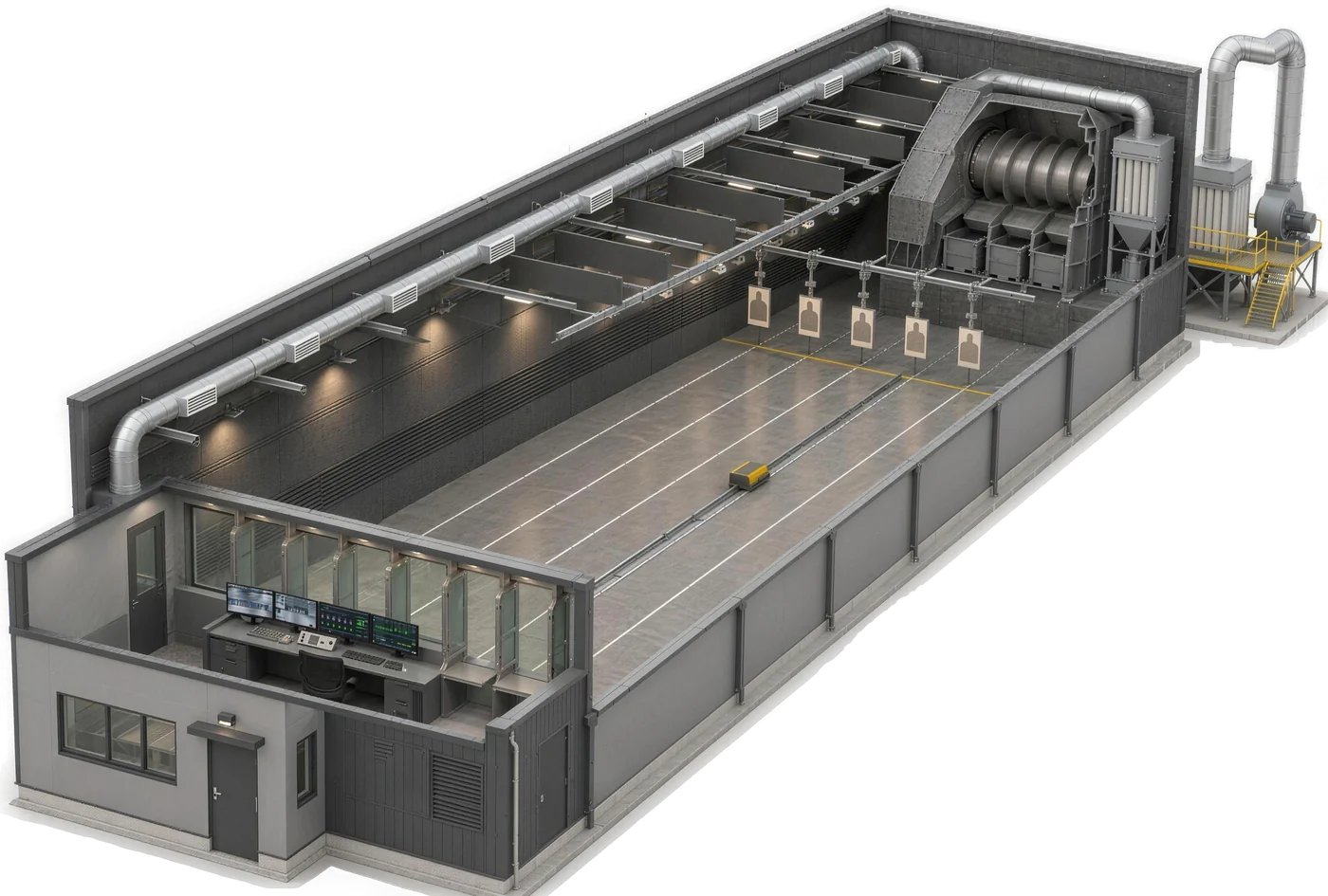
- No danger zone. A steel bullet trap stops and collects every round inside, so nothing leaves the range and no safety zone is needed around the building.
- Any hour, any weather. The range runs 24/7, and software-controlled lighting gives dawn, day, dusk and night profiles for night-firing practice.
- Pistol to rifle. Small arms from 9 mm up to 7.62 mm: pistol, carbine and rifle.
- Clean air. Fresh air flows across the firing zone, and a HEPA-filtered exhaust with automatic control clears lead and fumes.
- Quiet for the neighbours. Ribbed anti-ricochet wall lining and acoustic baffles cut noise and ricochet.
- One operator. A single-operator control room runs ventilation, targets, communication and CCTV, with live firing results on screen.
What to specify
| Figure | Why it matters | Indoor Shooting Range |
|---|---|---|
| Range length | Sets the practices you can fire | 25-100 m, configured to the site |
| Lanes | Sets how many firers train at once | 6-8 per module |
| Calibres | Must cover the weapons on issue | 9 mm to 7.62 mm (pistol, carbine, rifle) |
| Operation | Training on every shift | 24/7, all-weather; dawn, day, dusk and night profiles |
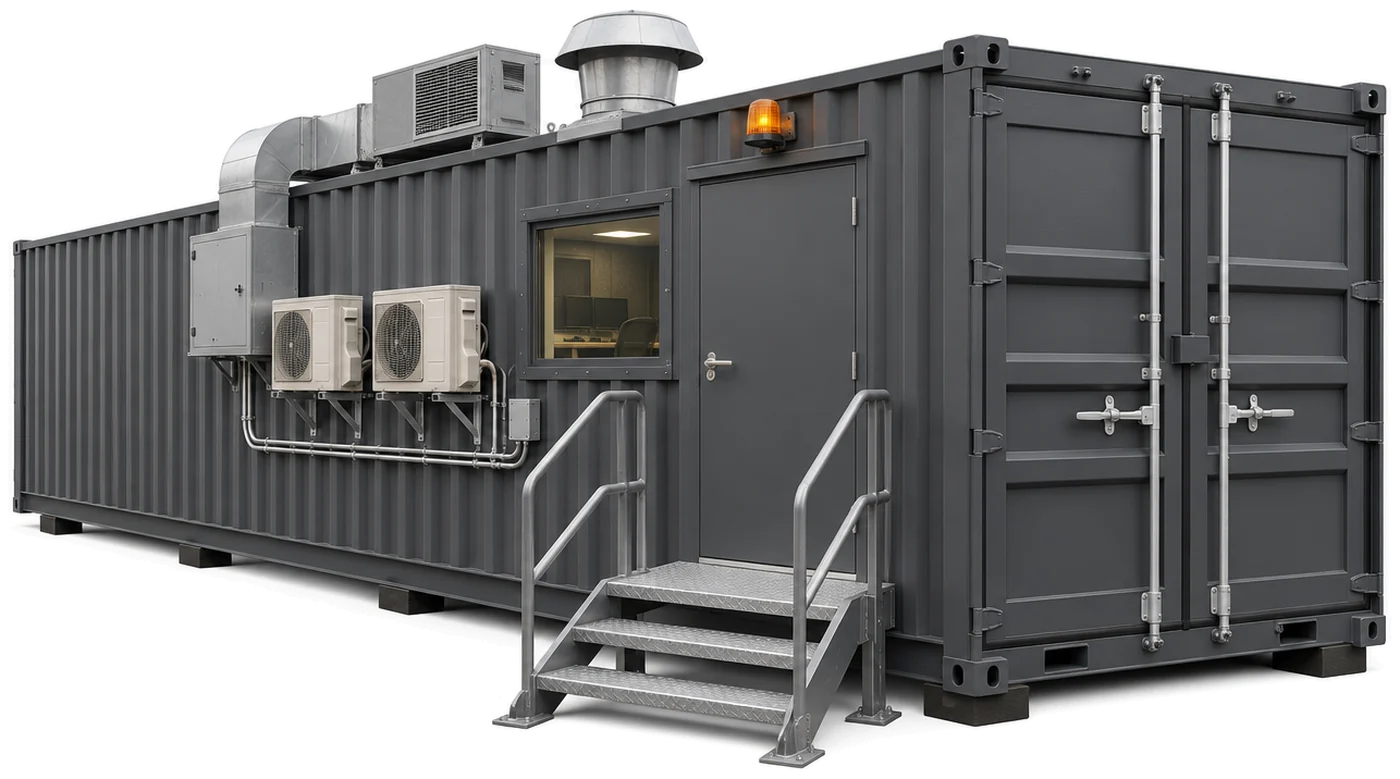
| Structure | Safety of people outside | Prefabricated, bullet-resistant steel-composite building on levelled concrete |
| Containment | No round may leave the range | Steel bullet trap with deceleration chamber and dust collection; no external danger zone |
| Firing bays | Separation between firers | Bullet-resistant glass partitions; standing, kneeling and prone |
| Ventilation | Lead and fumes on the firing line | Fresh-air flow, HEPA-filtered exhaust, automatic control |
| Control | Staff needed to run a detail | Single-operator control room with CCTV and live firing results |
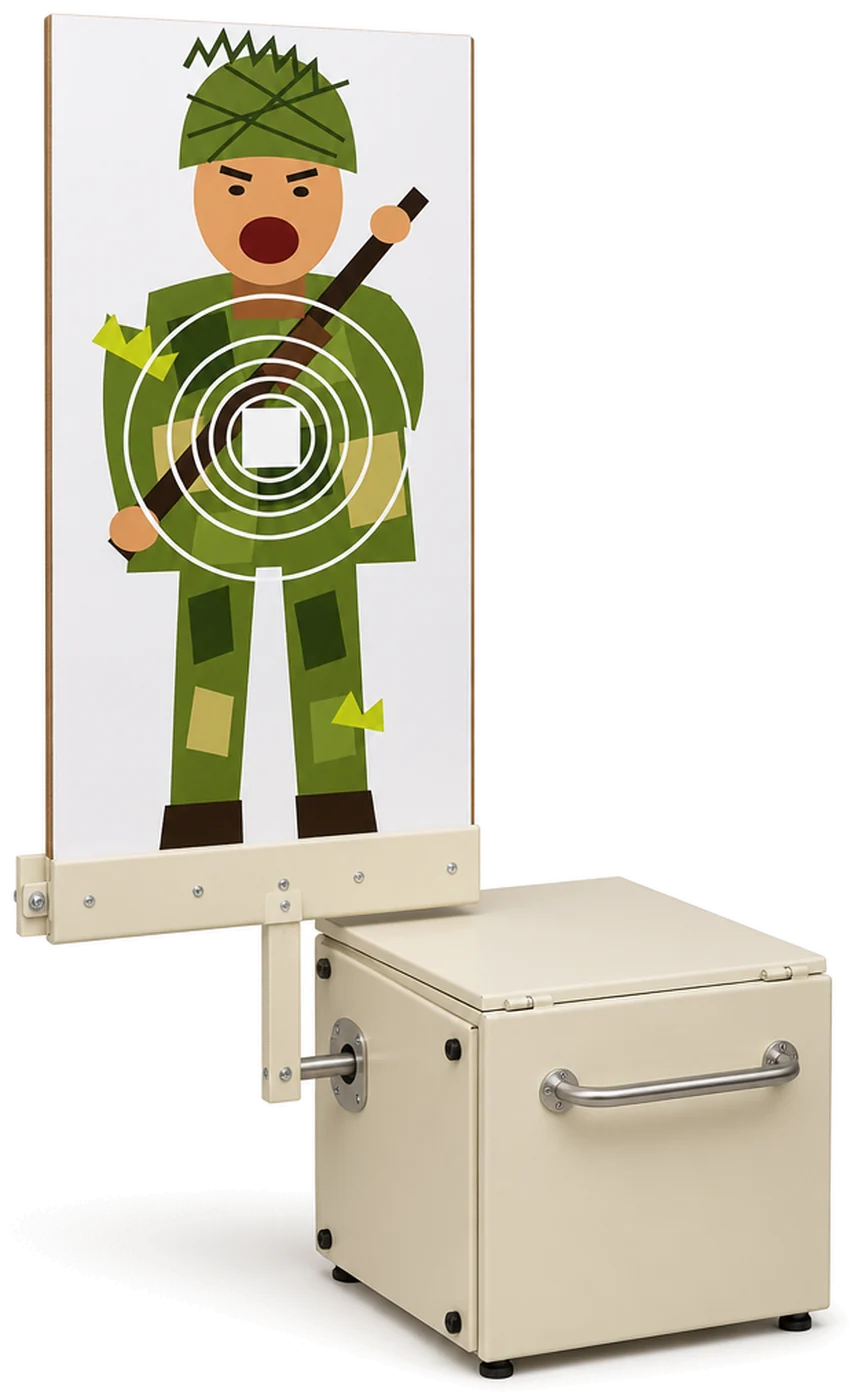
| Targets | Variety of drills | Multi-function pop-up (2 s or less), horizontal and overhead moving, virtual (to 500 m), precision and accuracy station |
How a range is delivered
- Survey. We study your site, weapons and throughput.
- Design. The range is engineered around them: length, number of modules, lanes and the target mix.
- Build and check. The prefabricated range is built and checked in our own facility.
- Install. The building goes up on a levelled concrete foundation at your site.
- Train the operators. Your staff learn to run the range from the control room.
- Support. Spares and maintenance follow after delivery.
Who it suits
The Indoor Shooting Range is built for work like this. It suits:
- State police at police lines, district headquarters and armed-police battalions.
- Police academies and training institutes that run structured firing courses.
- CAPF such as CRPF, BSF, ITBP, SSB and CISF, and Assam Rifles, at camps and training centres.
- Army, Navy and Air Force units that want rifle practice up to 7.62 mm inside unit lines.
- Any site short of land, where an outdoor range cannot be built.
Buying it: manufacturer details, GeM and tenders
Star INXS designs and builds the Indoor Shooting Range in India and is certified to five ISO management-system standards. You can buy through GeM, an open or limited tender, a defence portal or a direct purchase order.
Our Tender & GeM desk shares OEM authorisations, technical compliance statements and bid documents written against your specification.
- Send the requirement. Attach your tender specification or RFP to the quote request and we respond against it.
- Ask for a budgetary quote. Prices depend on the configuration and the quantity, so tell us the site, the numbers and the options you need.