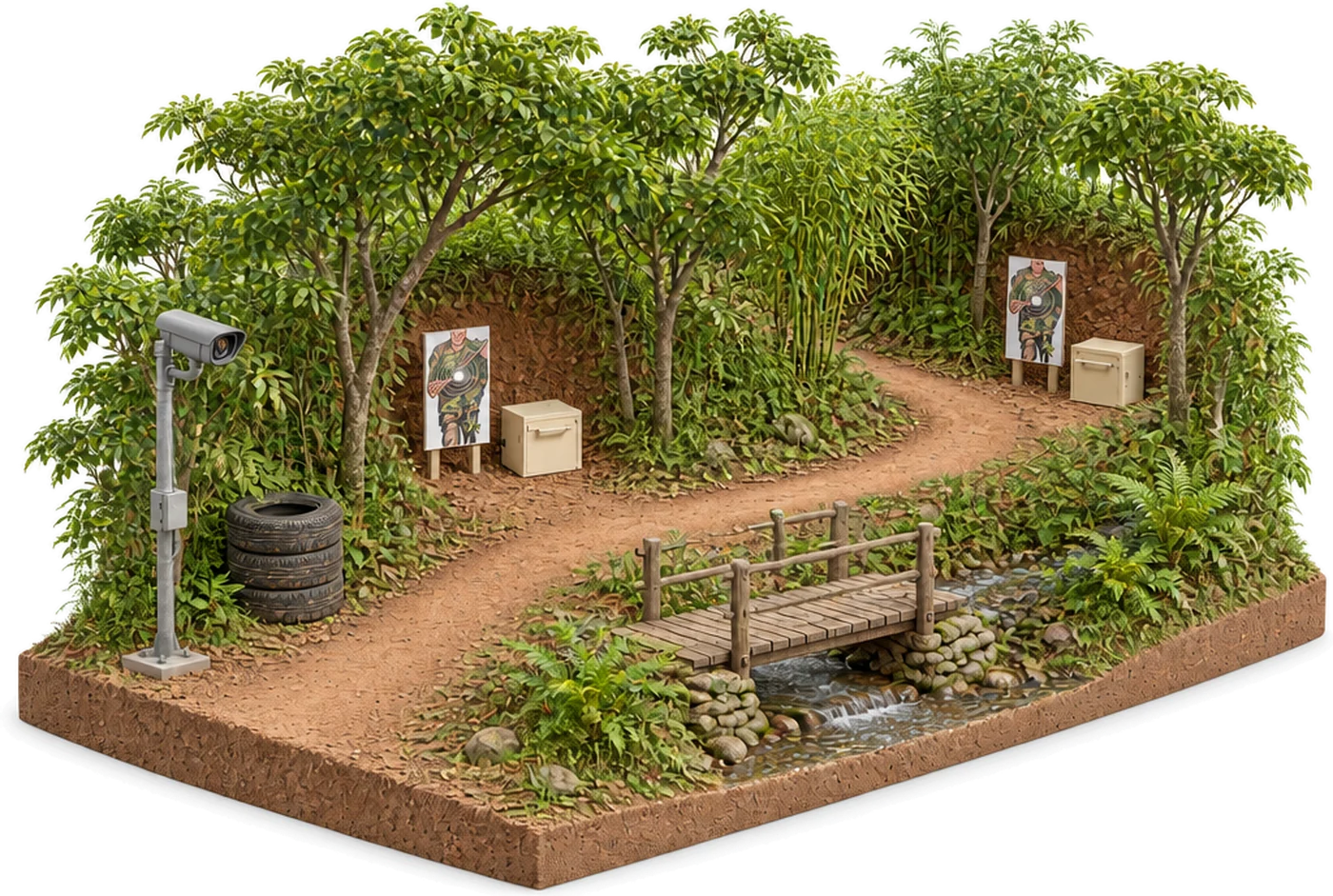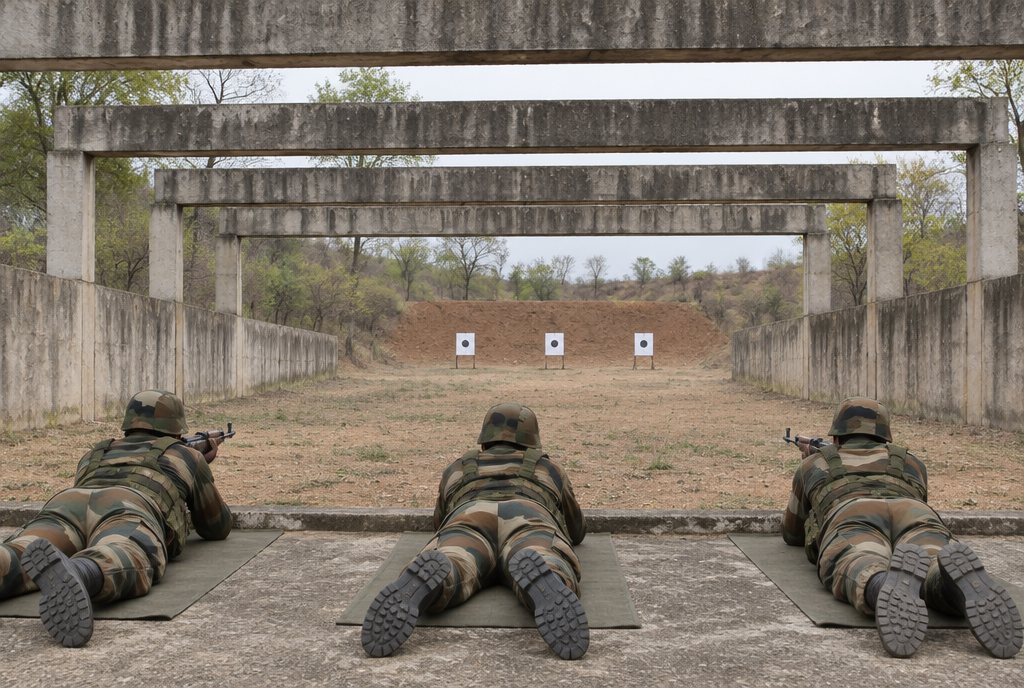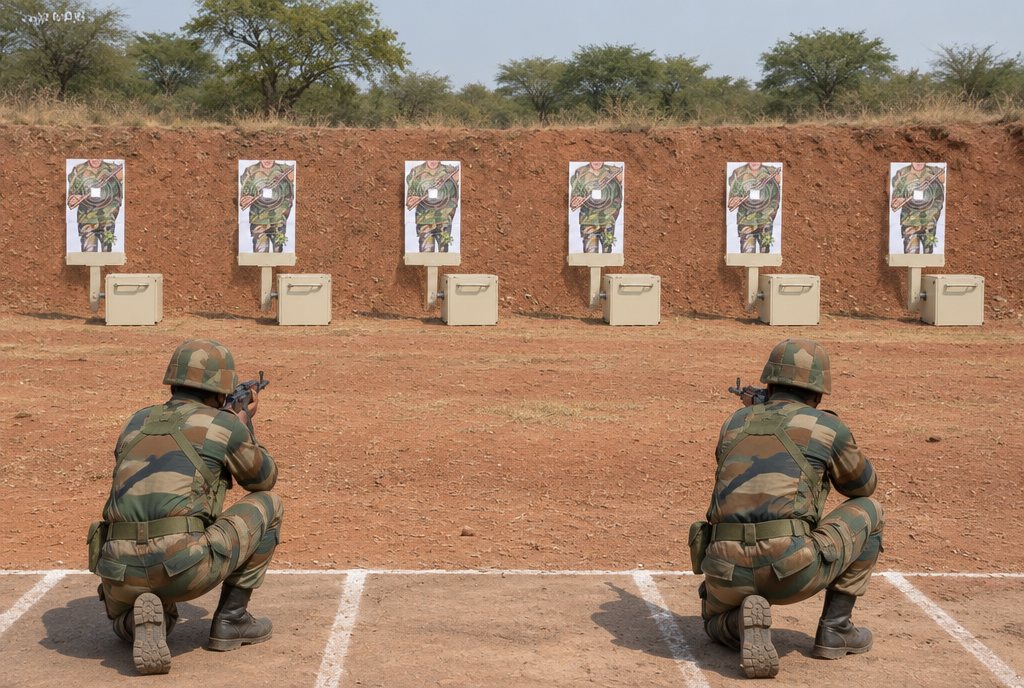
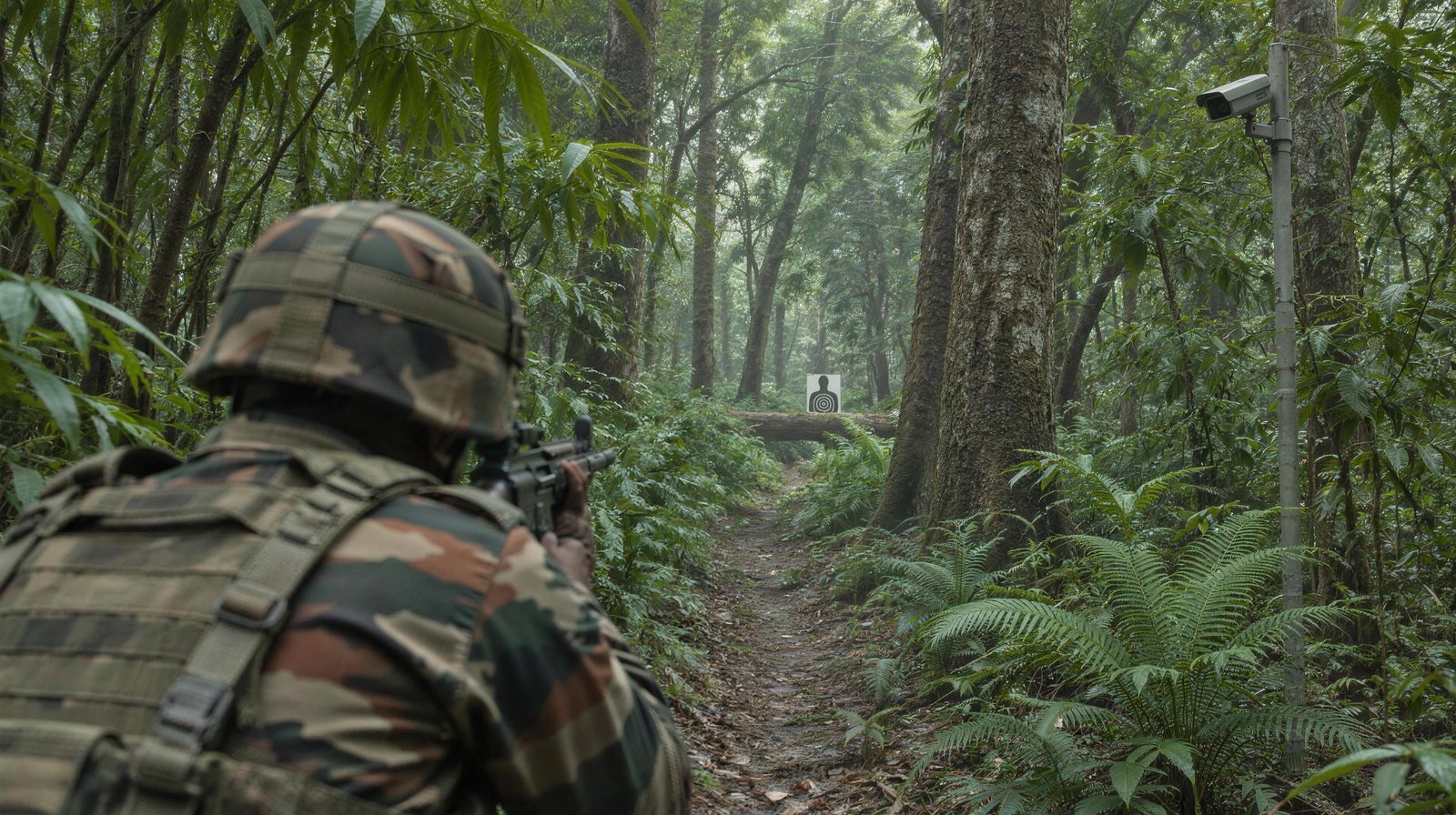
Jungle fighting is about seeing first and reacting fast in close country. A flat range with targets in a row cannot teach that. A jungle lane puts the trainee on a trail through real cover, where targets appear among the trees and an instructor watches every engagement on camera.
What counter-insurgency training needs from a range
The drill is movement, observation and a quick, controlled shot at a target that appears without warning. The Jungle Lane Range is designed around that drill.
- A real trail. A winding route from start to finish through cover, which forces movement, observation and fire control.
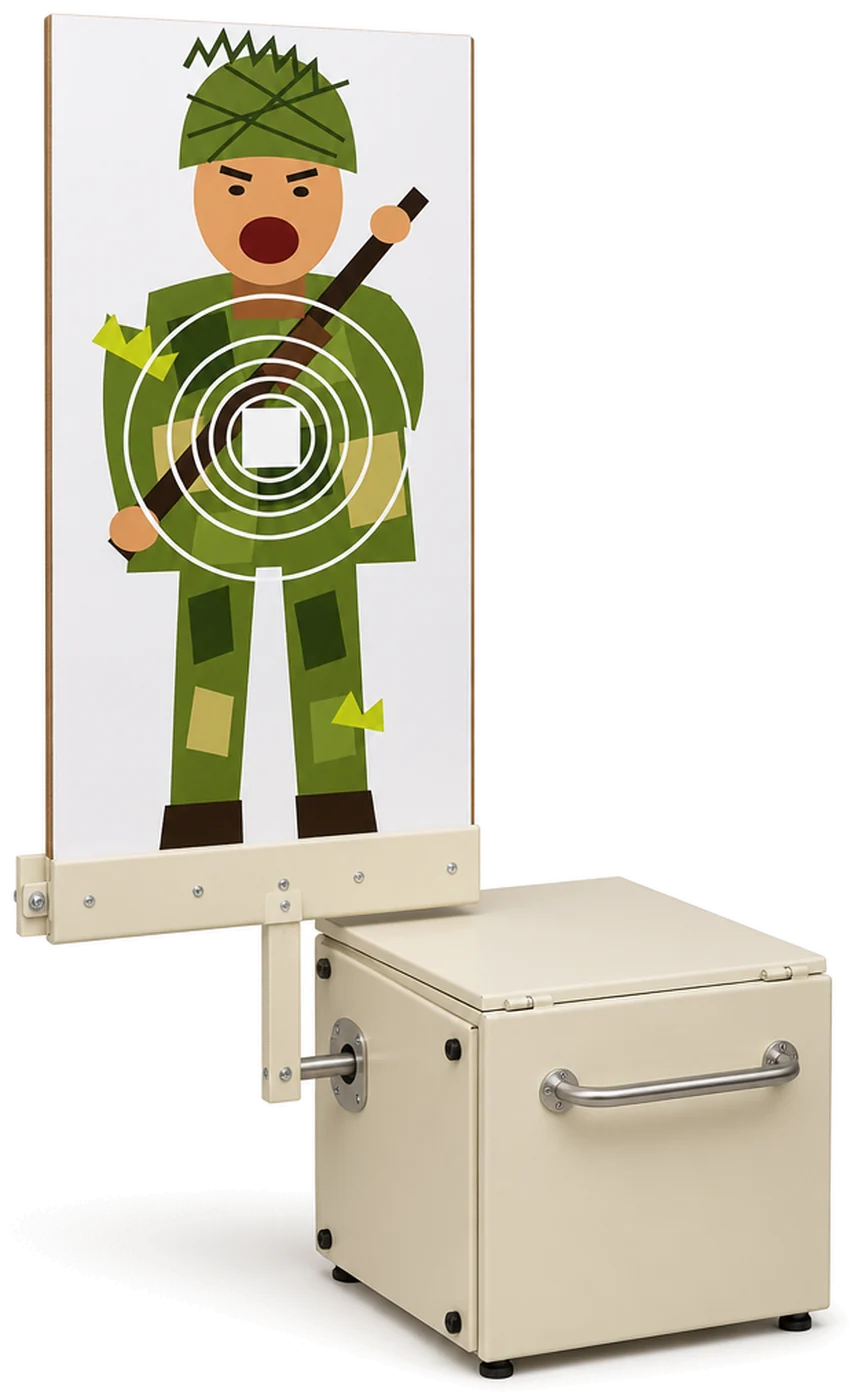
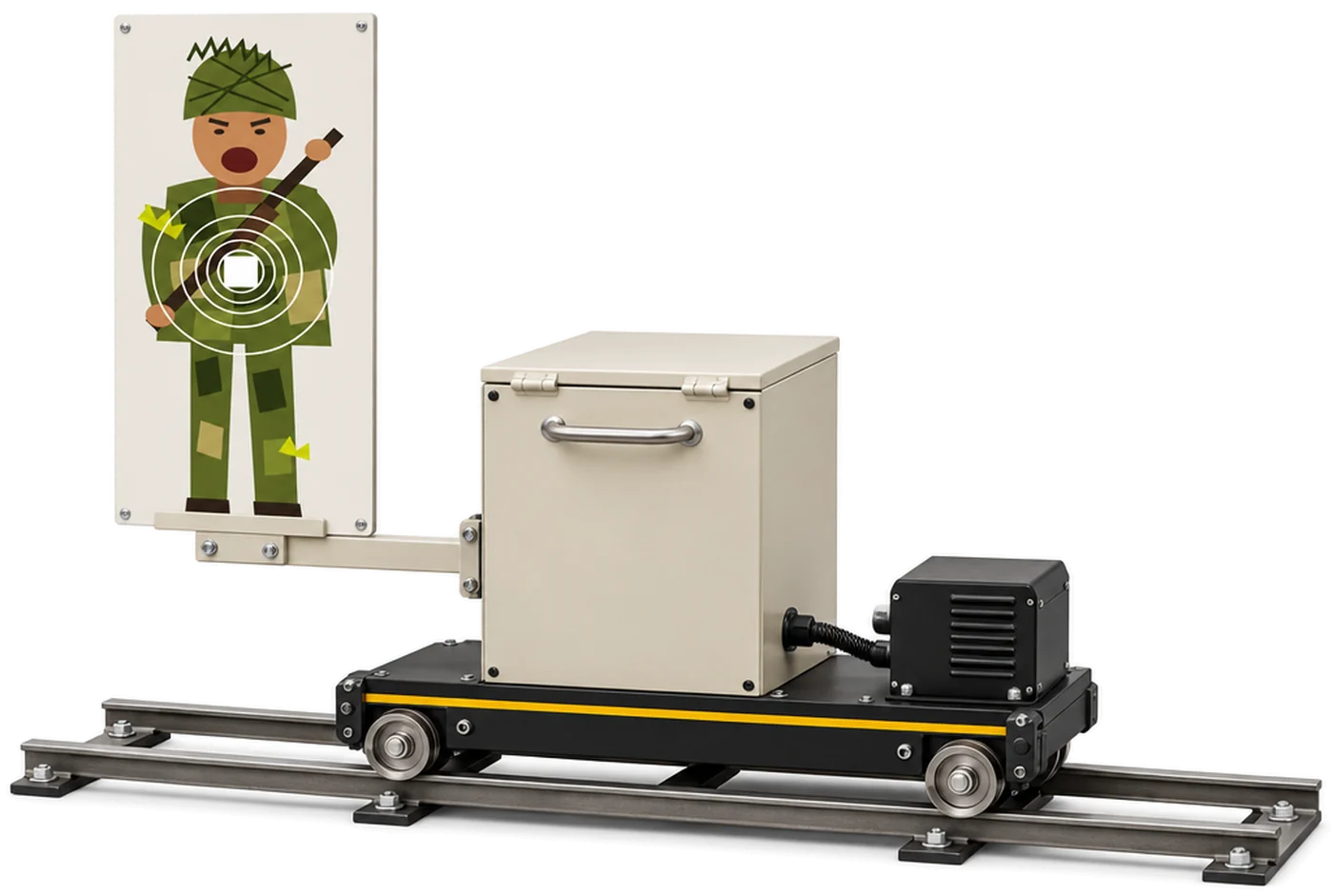
- Targets where a threat could be. Individual targets of different types and sizes, hidden in the cover beside the trail.
- No two runs the same. The instructor raises any target at any moment from the control station.
- Obstacles on the way. Tyres, a wooden footbridge, a stream crossing and wire, as the site allows.
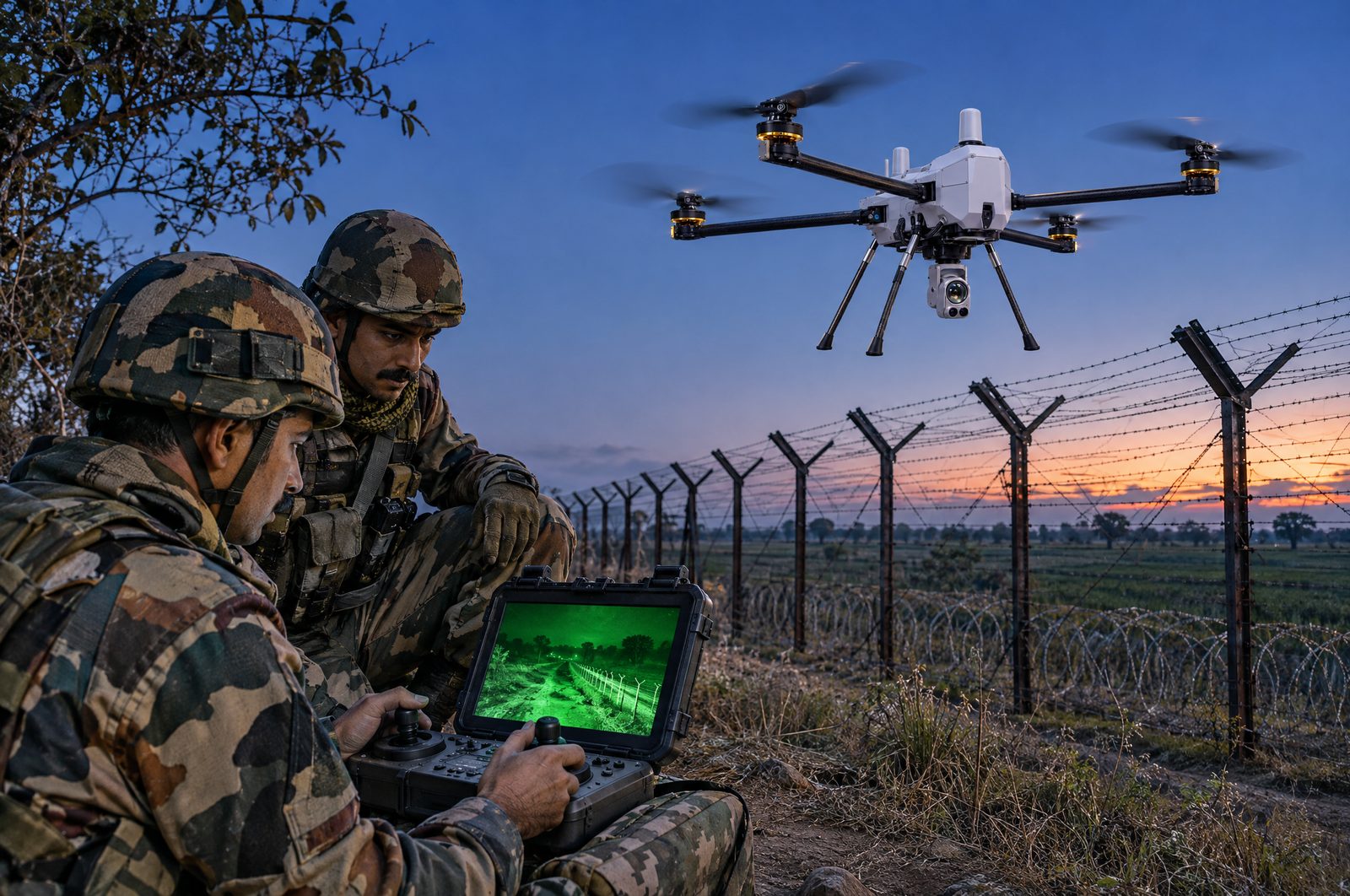
- Supervision. CCTV covers every engagement area, so the instructor sees each trainee and controls each exposure.
- An honest debrief. The cameras record every engagement, and targets fitted with acoustic hit sensors count hits.
The figures that matter
The figures below are from the Star INXS reference layout. Every lane is laid out to the site, so yours may differ.
| Figure | Why it matters | Jungle Lane Range (reference layout) |
|---|---|---|
| Lane size | Land to set aside | About 50 x 120 m; laid out to the site |
| Route | Movement between engagements | Start point to finish point along a winding trail through cover |
| Targets | Number and variety of engagements | 10: pop-up, slicing, up-and-down, moving and turning, in various sizes |
| Engagement distances | Realism for close country | 30-60 m from the route |
| Obstacles | Fatigue and movement under load | Tyres, a wooden footbridge, a stream crossing and wire, as the site allows |
| CCTV | Safety, control and debrief | 6 cameras covering every engagement area |
| Control | Staff needed to run the lane | Control station at the start point: target control and CCTV monitoring |
| Delivery | What the supplier does | Site survey, layout, installation, cabling and instructor training |
How a lane is laid out and run
- Survey the site. We survey the forest and set the firing directions, stops and danger areas.
- Lay out the lane. The route, targets, obstacles and cameras are placed around the trees, streams and slopes of the site.
- Install and cable. Targets and cameras are installed and cabled back to the control station at the start point.
- Train the instructors. Your instructors learn to run the targets and the cameras.
- Run the lane. Trainees are briefed at the start point and go through one at a time or in pairs, while the instructor raises targets and watches every camera.
- Debrief. The run ends at the finish clearing, and the recorded footage and hit counts go to the debrief.
Who it suits
The Jungle Lane Range is built for work like this. It suits:
- Army jungle warfare and counter-insurgency schools and unit training areas.
- Assam Rifles and other forces that train for close country.
- CAPF such as CRPF, BSF, ITBP and SSB, for jungle and counter-insurgency courses.
- NSG and special units that practise reaction shooting on the move.
- State police counter-insurgency units and their training centres.
Buying it: manufacturer details, GeM and tenders
Star INXS designs the Jungle Lane Range in India, lays each lane out to the site, and is certified to five ISO management-system standards. You can buy through GeM, an open or limited tender, a defence portal or a direct purchase order.
Our Tender & GeM desk shares OEM authorisations, technical compliance statements and bid documents written against your specification.
- Send the requirement. Attach your tender specification or RFP to the quote request and we respond against it.
- Ask for a budgetary quote. Prices depend on the configuration and the quantity, so tell us the site, the numbers and the options you need.