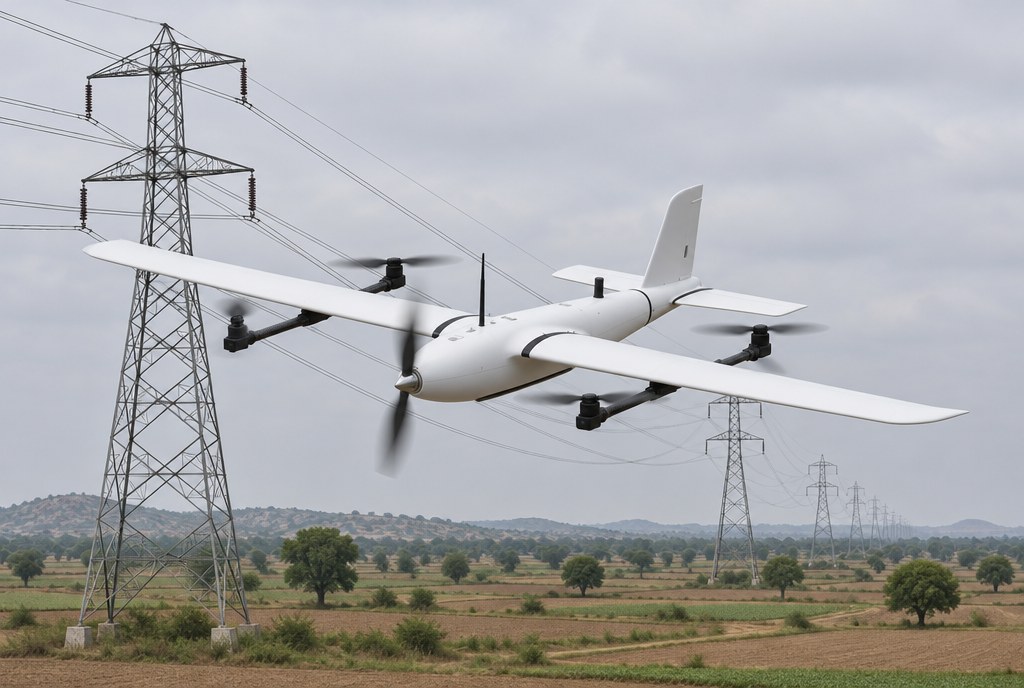
Power lines, pipelines, roads and canals run for kilometres and cross difficult ground. Inspecting them on foot or by road is slow; a multicopter has to land every few kilometres. A fixed-wing VTOL flies the line efficiently and launches from a small clearing.
Why fixed-wing VTOL for a long line
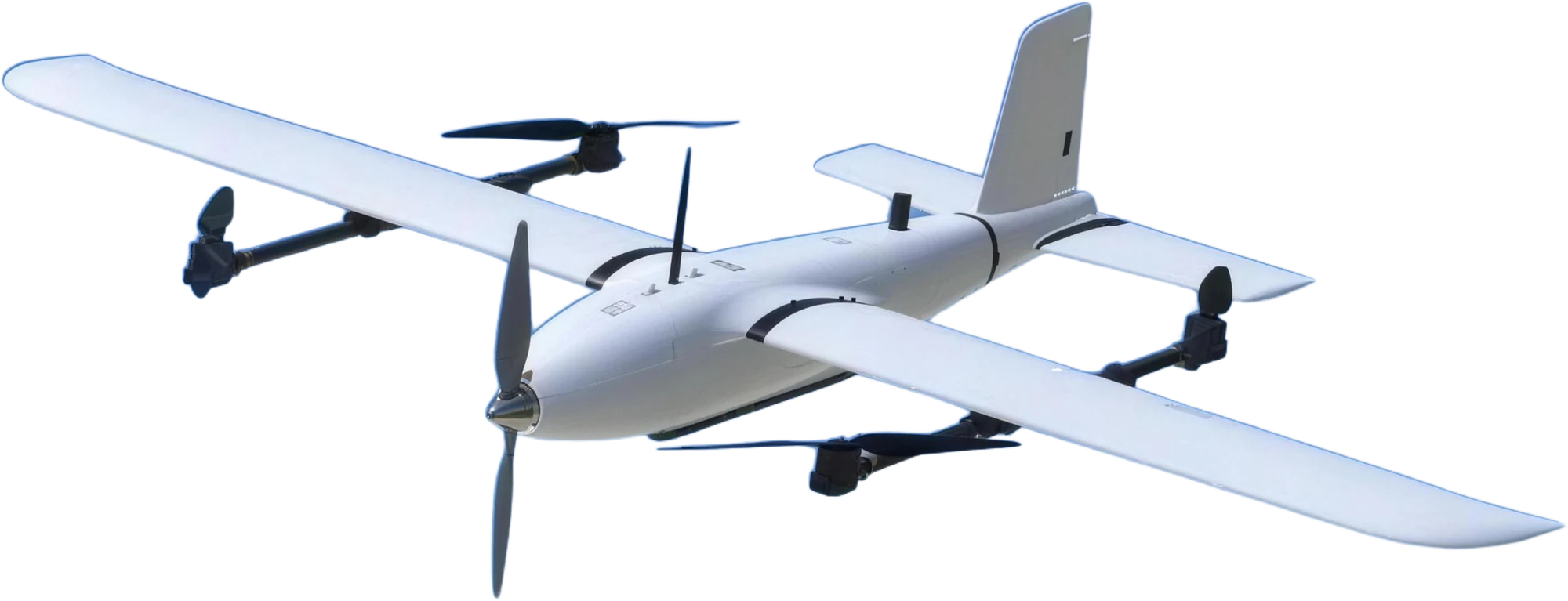
A corridor survey is about distance. The SV-2.4 spends most of its flight on its wing, which is far more efficient than hovering on rotors, so a single sortie covers many kilometres of line.
- Distance. 95 to 127 km of range, tested at 500 m with a 600 g payload.
- Speed. Cruise of 17 to 22 m/s, so a line is flown quickly.
- Payload. Up to 2.5 kg for a 61 MP camera, or EO/IR and visible gimbal cameras.
- Autonomy. Waypoint missions follow the line, with return-to-launch and failsafes for RC loss, low battery and GPS loss.
- Small launch site. Vertical take-off and landing from a clearing near the line.
What to specify for linear inspection
| Question | Why it matters | SV-2.4 |
|---|---|---|
| How long is the route? | Decides whether one sortie covers it | 95–127 km range |
| What must be seen? | Fittings, insulators, corrosion, encroachment | 61 MP camera under 1 cm per pixel, or EO/IR gimbal |
| How heavy is the sensor? | Payload limits endurance | 1.5–2.5 kg capacity |
| Where can it launch? | Lines cross forests and hills | VTOL, no runway; 4,000 m service ceiling |
| What if something fails? | Long routes are far from the pilot | Return-to-launch, geofencing, failsafes |
Where another drone fits better
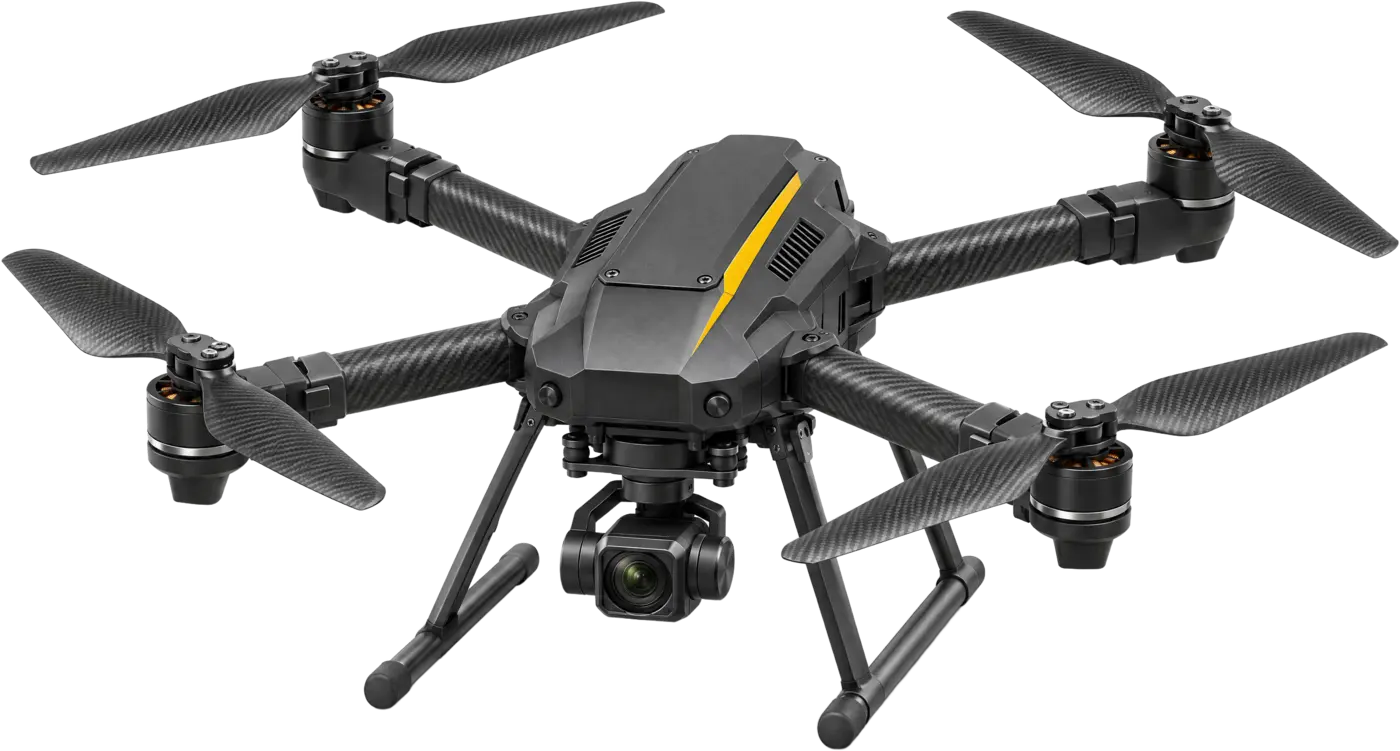
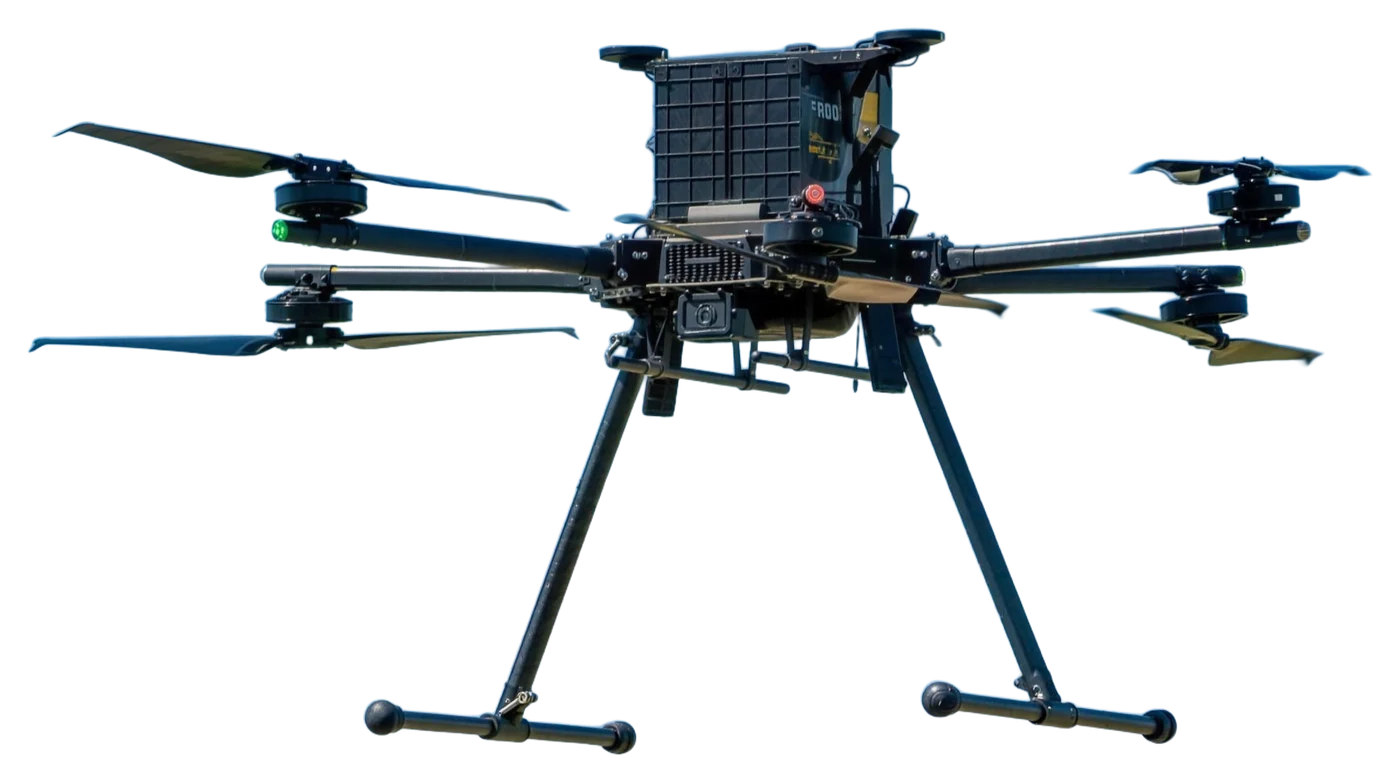
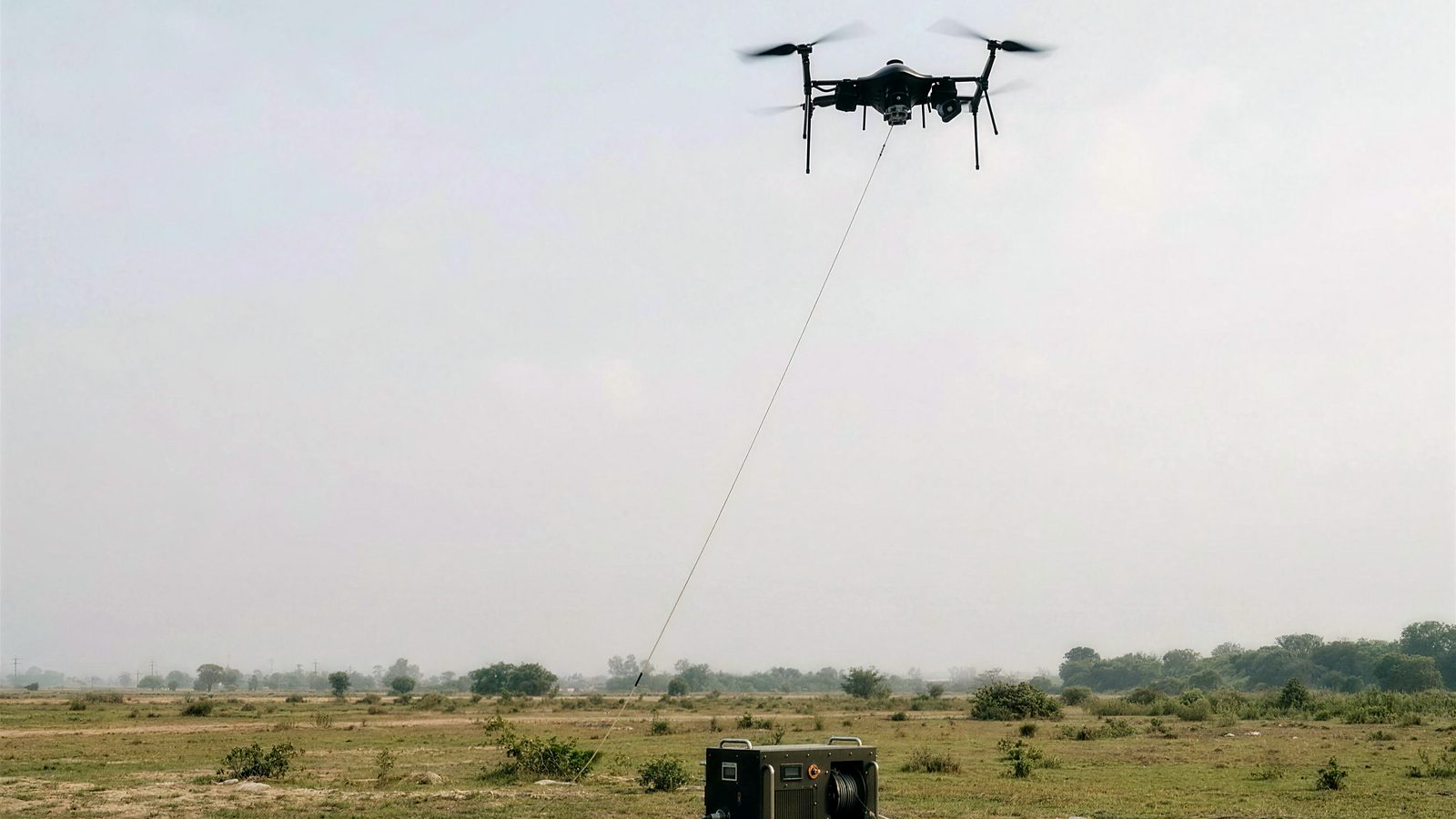
To look closely at a single tower, hover beside a fitting or fly under a bridge, a multicopter such as the MQ-750 MKIII is the right tool. To watch one site continuously, see the Tethered Surveillance UAV. Use the SV-2.4 for the long run between them.
Who it suits
The SV-2.4 is built for work like this. It suits:
- Power transmission and distribution utilities that inspect long lines.
- Oil, gas and water pipeline operators and their security teams.
- Road, rail and highway agencies that inspect corridors.
- Renewable-energy developers with solar and wind sites to survey.
Buying it: manufacturer details, GeM and tenders
Star INXS designs and builds the SV-2.4 in India and is certified to five ISO management-system standards. You can buy through GeM, an open or limited tender, a defence portal or a direct purchase order.
Our Tender & GeM desk shares OEM authorisations, technical compliance statements and bid documents written against your specification.
- Send the requirement. Attach your tender specification or RFP to the quote request and we respond with a technical compliance statement.
- Keep a one-page sheet. Download the PDF sheet for this use case to attach to your internal note.