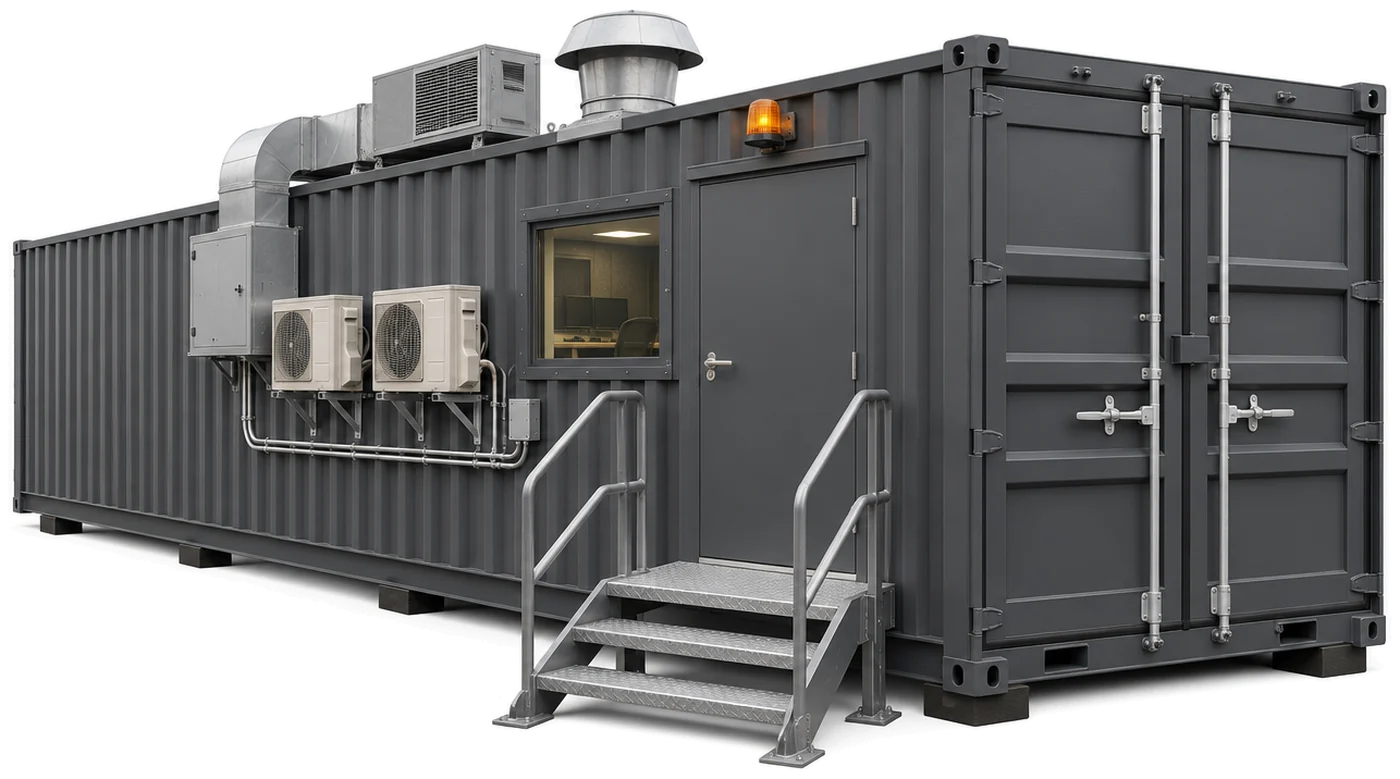
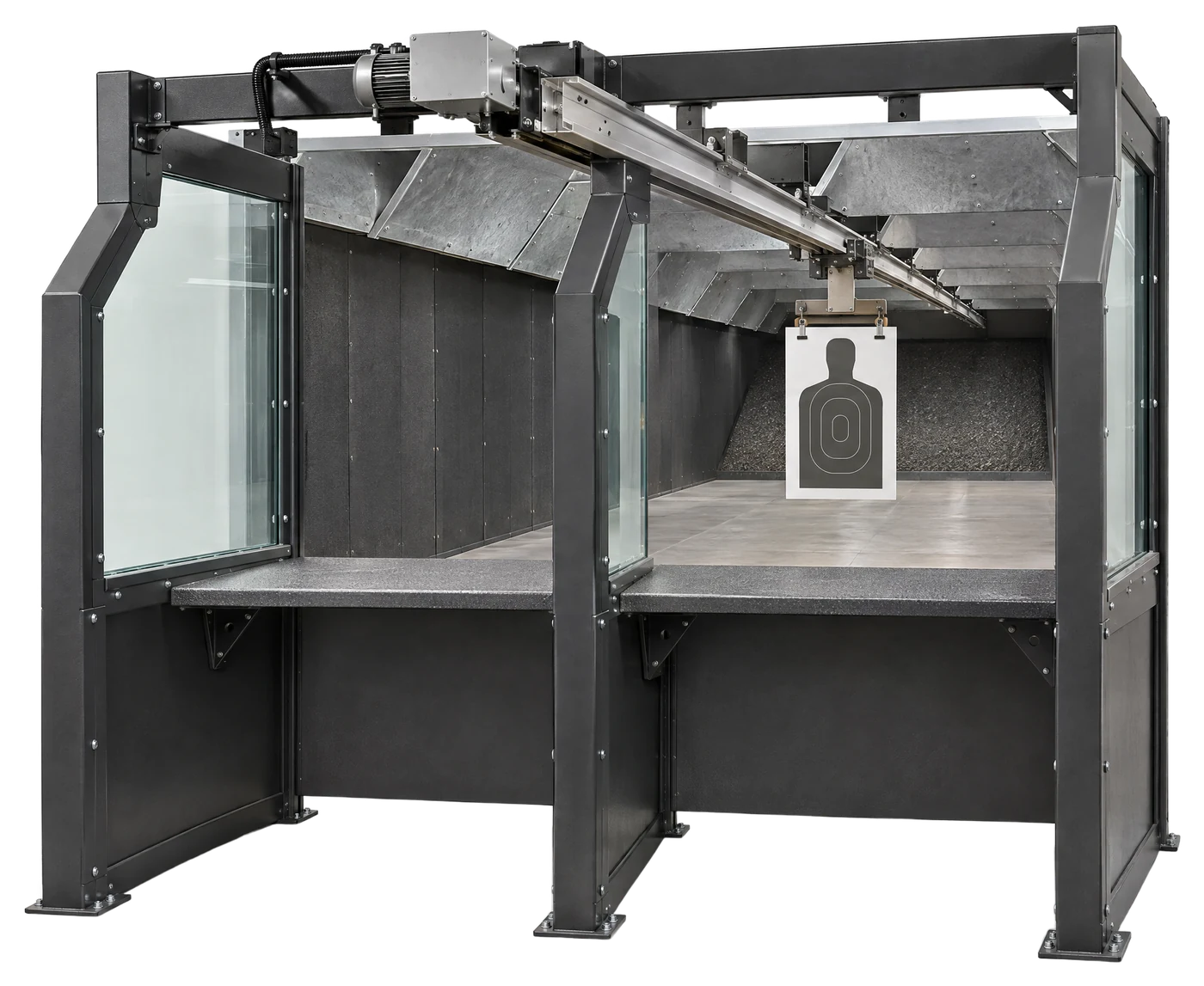
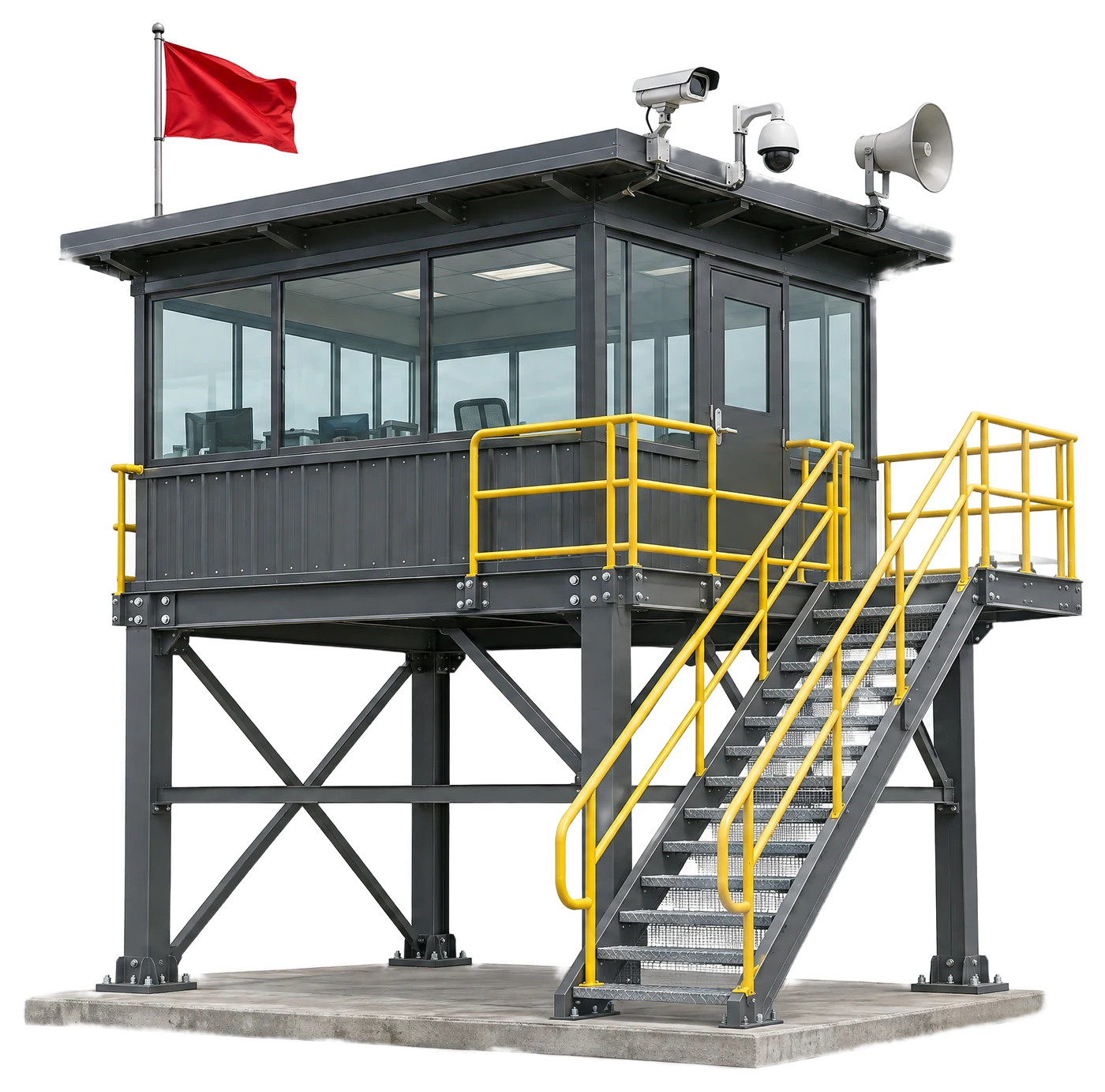
Most units planning a new range weigh three options: a range inside a shipping container, a modular indoor range, or an outdoor range on open land. Each answers a different problem. This guide compares them on the points that decide the choice.
The three options side by side
| Containerized | Indoor (modular) | Outdoor | |
|---|---|---|---|
| Format | 20 ft, 40 ft or twin 40 ft ISO container | Prefabricated, bullet-resistant steel-composite building | Baffle, open-field, CQB or long-range |
| Live-fire distance | 10–25 m | 25–100 m | Laid out to your distances |
| Lanes | 2–4 | 6–8 per module | To your detail size |
| Calibres | Pistol and carbine | 9 mm to 7.62 mm: pistol, carbine, rifle | Set by the range design and its danger area |
| Land | A container footprint | A compact site with no external danger zone | Open land with a danger area, or baffles on a compact site |
| Moves? | Yes: ships and relocates in days | No, but prefabricated | No |
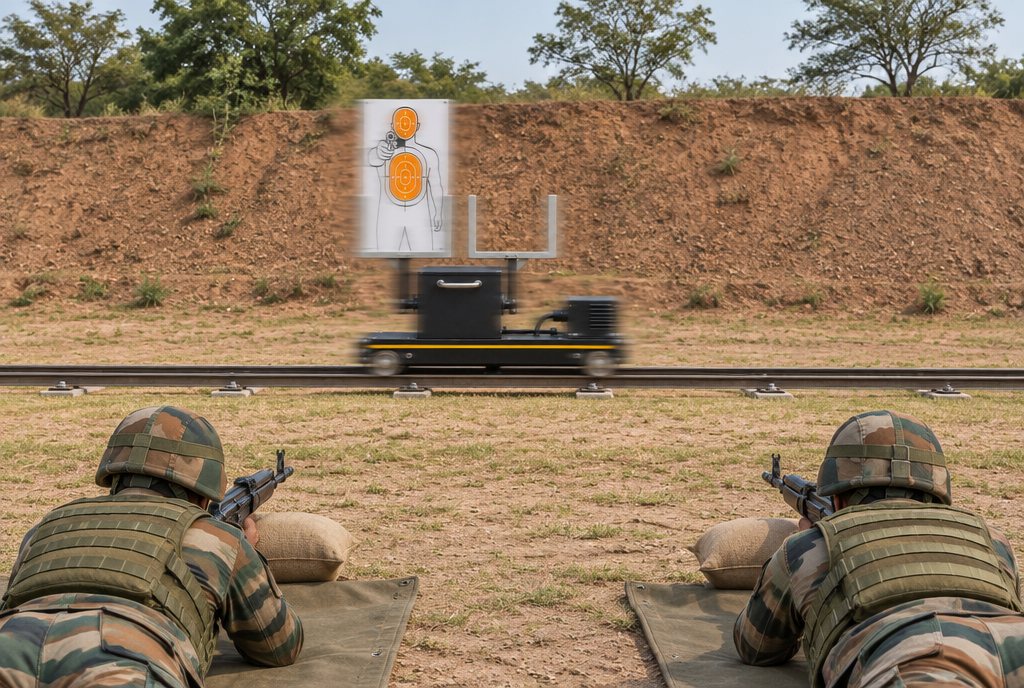
| Targets | Containment, lanes and controls built in | Pop-up, horizontal and overhead moving, virtual (to 500 m), precision station | Turning, pop-up and moving targets |
| Best for | Units on the move, police lines, live fire before a permanent range | Police and army ranges close to where people live and work, academies, sites with no land | Field firing and long-range practice |
When does a containerized range make sense?
A containerized range is a live-fire range built inside an ISO container. Containment, lanes and controls are all inside, so it ships, installs and relocates in days, with no permanent building.
It suits units that move, ranges shared between locations, and units that need live fire before a permanent range can be built. The trade-off is distance and calibre: 10–25 m, for pistol and carbine.
When should you build an indoor range?
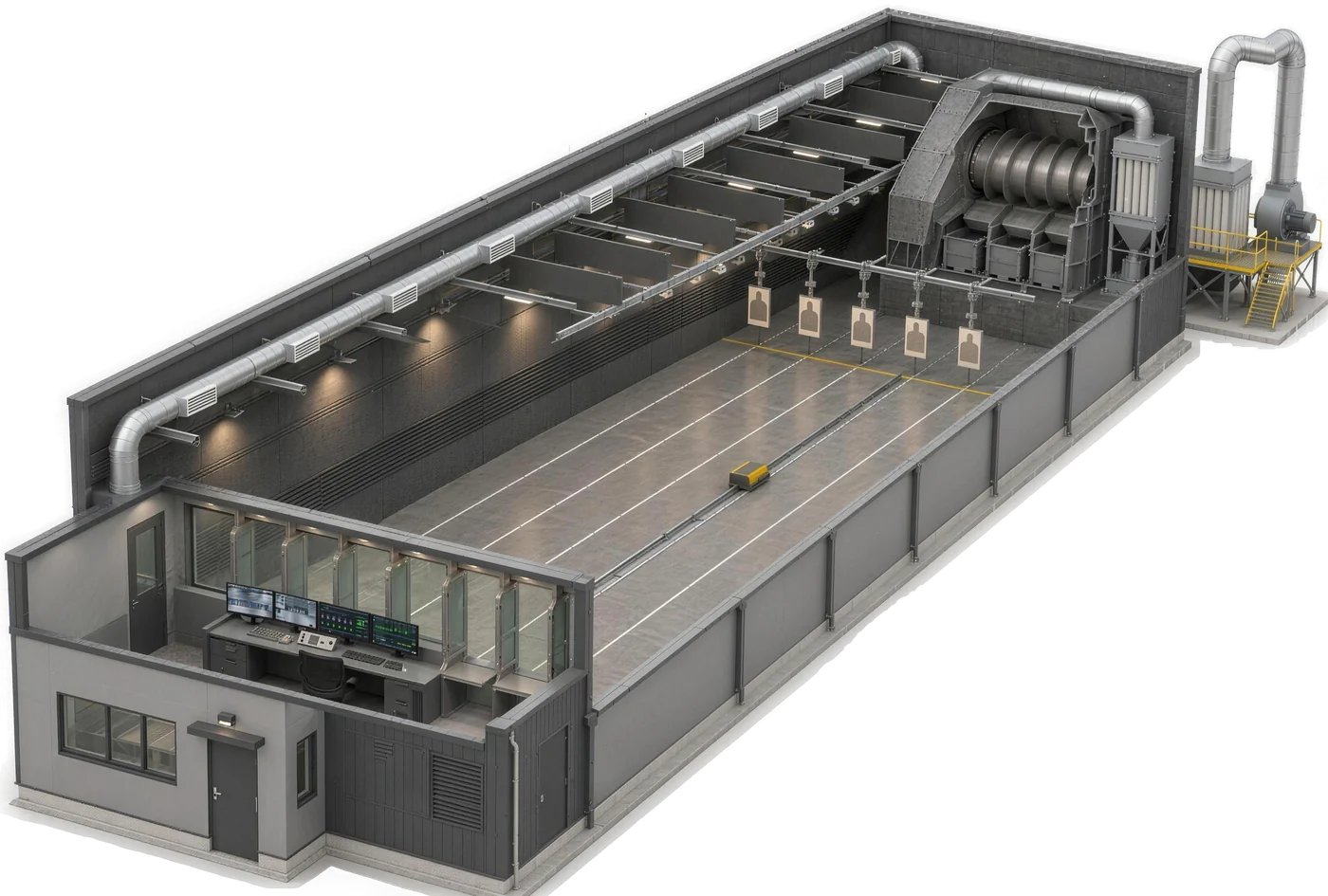
An indoor range brings live fire close to where people train, around the clock and in any weather. Ours runs 25 m to 100 m with 6 to 8 lanes per module, for small arms from 9 mm to 7.62 mm.
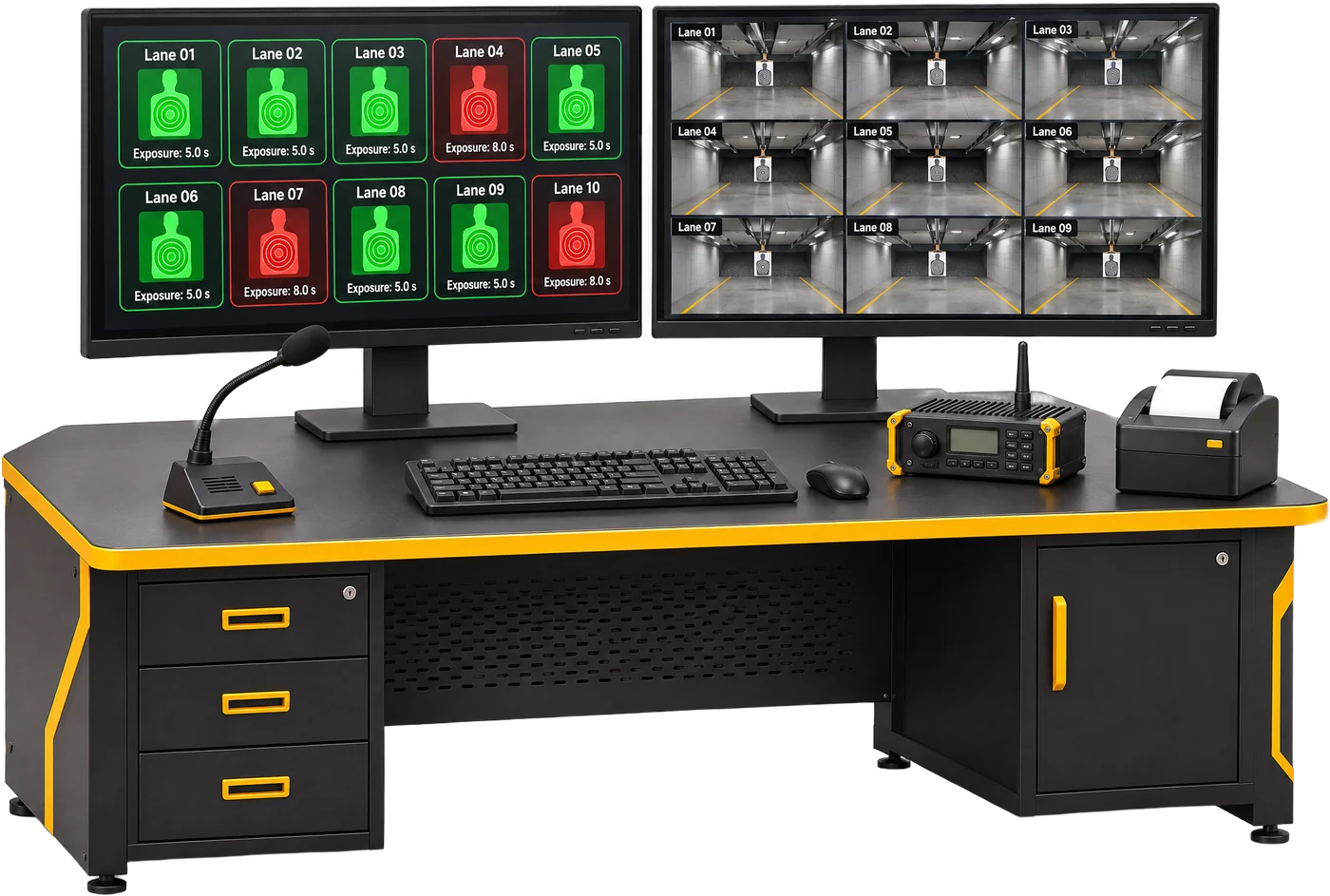
A steel bullet trap with a deceleration chamber stops and collects every round, so there is no external danger zone. Fresh-air flow and HEPA-filtered exhaust clear lead and fumes, and one operator runs ventilation, targets, CCTV and results from the control room.
For the engineering behind it, read Indoor shooting range design.
When is an outdoor range the right choice?
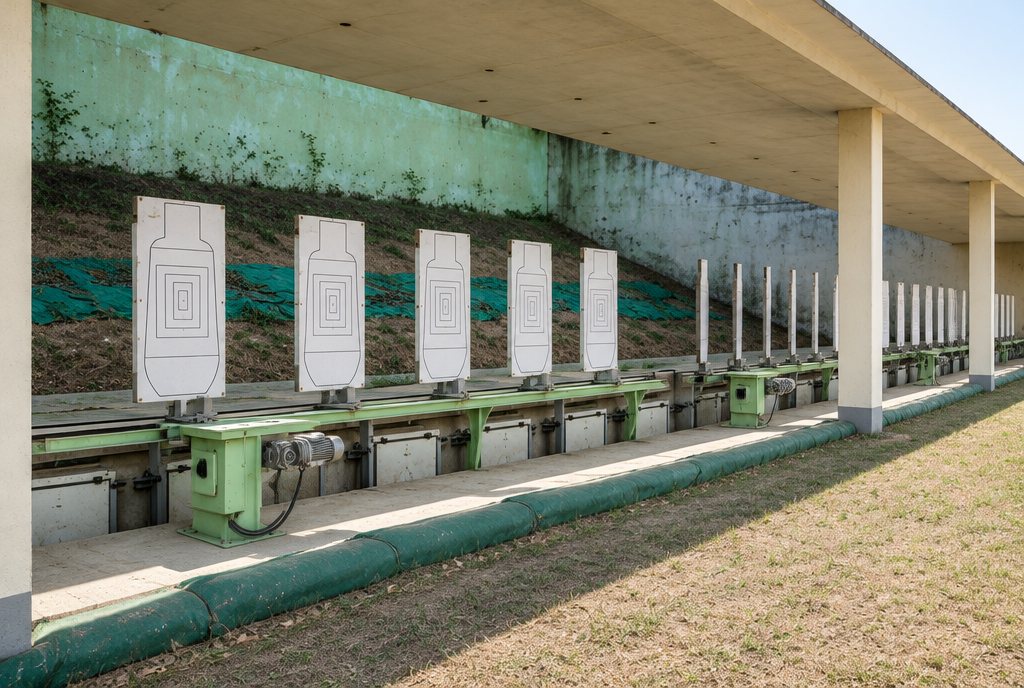
When you need live fire beyond 100 m, or field firing, build outdoors. Baffle ranges use overhead and side baffles to contain rounds on a compact site; open-field and long-range ranges lay out firing points and target lines to your distances; CQB ranges are laid out for room and building drills.
We deliver the whole range: site survey, civil works, berms and baffles, firing points, target lines, a control tower, cabling and target automation. Existing ranges can be automated too: see Turning targets or pop-up targets.
How do you choose?
- Write down the longest live-fire distance and the weapons your practices need.
- Count trainees per detail and per day to size the lanes.
- Check the land: is there room, and a danger area, for an outdoor range?
- Decide whether the range must move with the unit or serve several locations.
- Add the targets and range control your exercises need.
Questions to put in your QR
- Range length, number of lanes and firing positions (standing, kneeling, prone)
- Weapons and ammunition to be fired, now and in future
- Containment method and how rounds and dust are collected
- Ventilation and filtration for an indoor or containerized range
- Targets, range control, CCTV and how results are stored
- Survey, installation, operator training, spares and maintenance