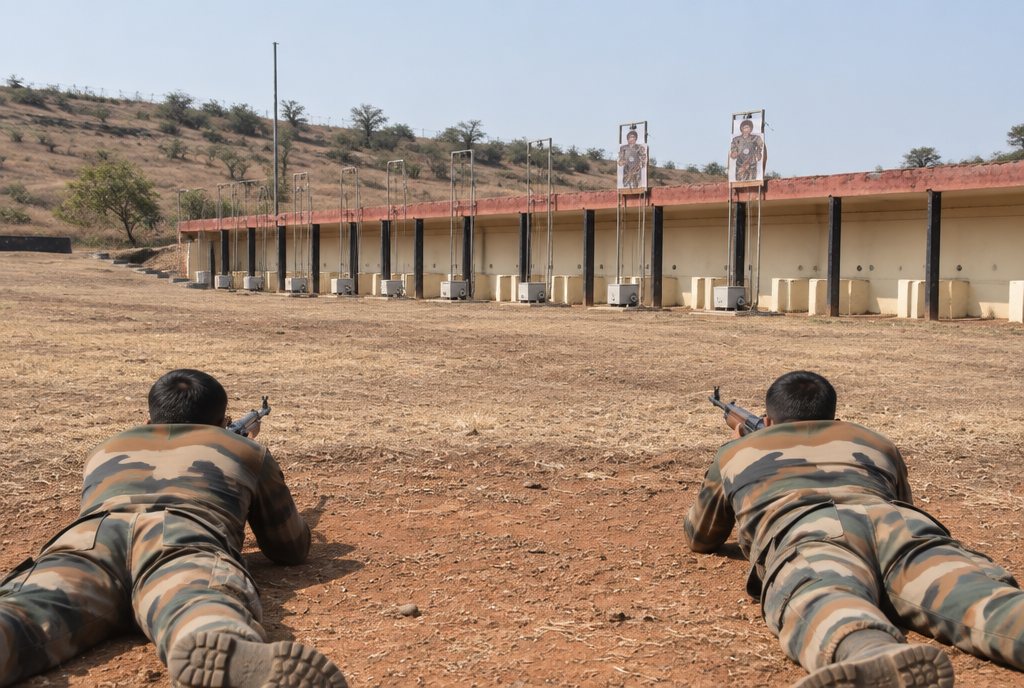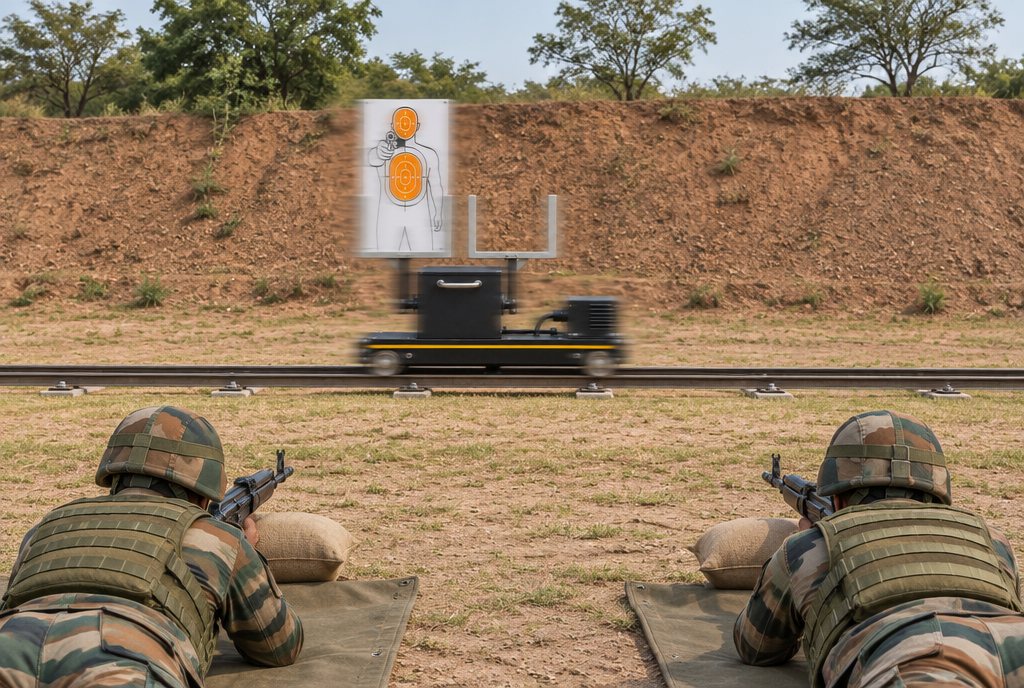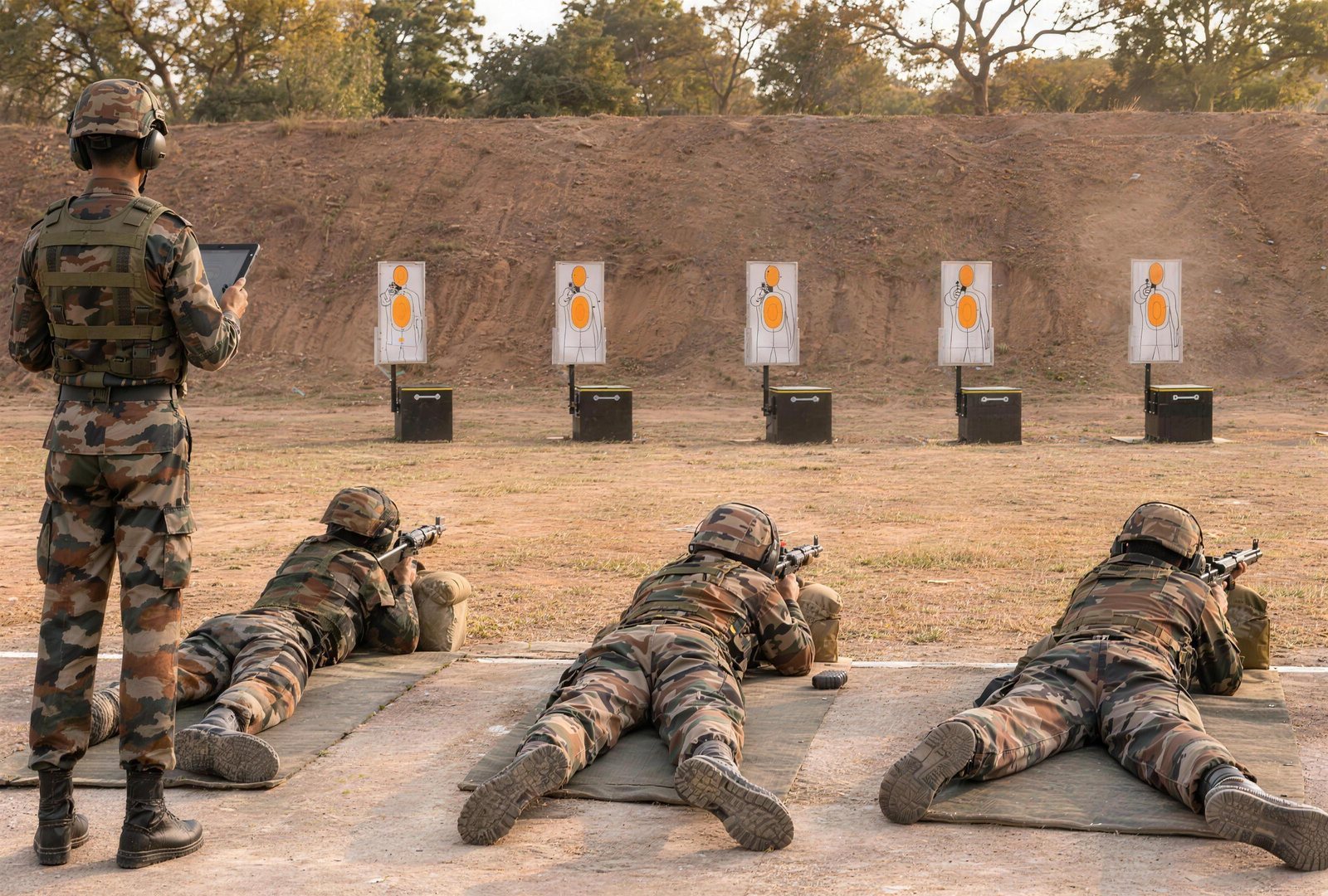
Many outdoor ranges still have targets raised and turned by hand. Automating them gives every firer the same exposure and lets one officer run the range from the control room. The first choice is between turning targets and pop-up targets, and most ranges end up using both.
How do turning targets work?
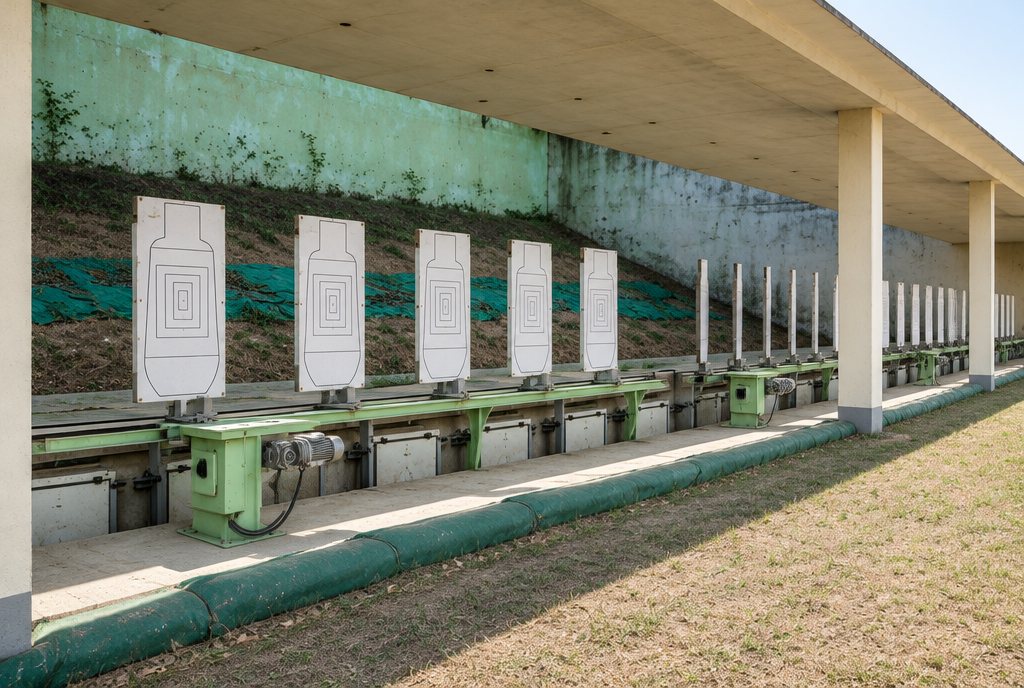
Targets stand in the butt gallery in sets of five. A geared electric motor in a steel housing drives a push-bar along the butt, and short crank arms on the bar hold the bottom of each target board. As the bar moves, all five targets turn together: face-on to the firers to expose, edge-on to hide.
Because each set turns as one, a detail of five firers shoots at identical exposures. See them on our outdoor ranges page.
How do pop-up targets work?
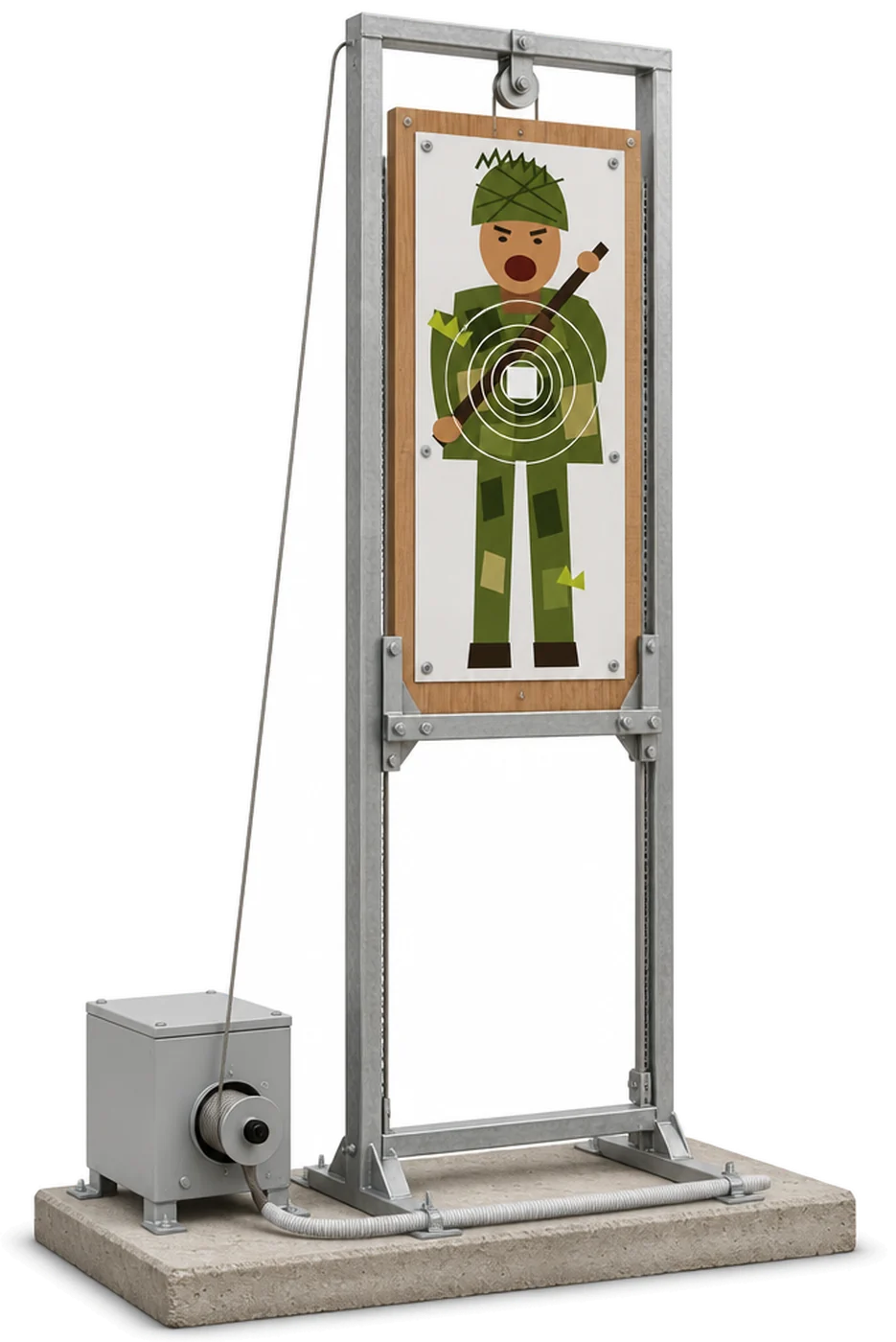
The single-function target lifts the face on twin guide rails in a steel frame in the butt gallery, then drops it on a hit or when the exposure ends.
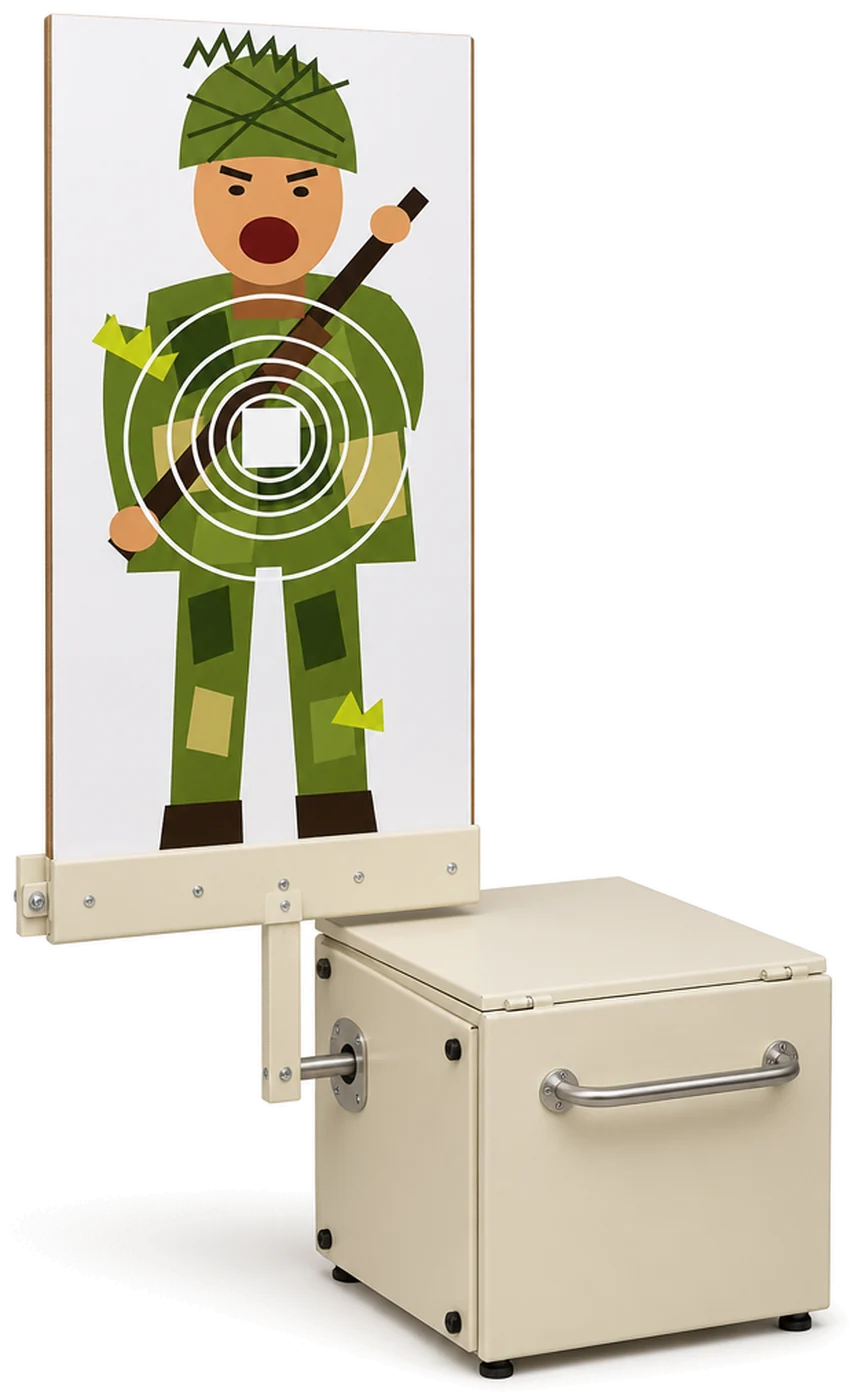
The multi-function target is a steel box in front of the butt, behind a 2 m gabion wall. It pops the face up (0–90°), slices it edge-on or rotates it, in 2 seconds or less, with exposures from 1 second to 2 minutes and a set number of hits before hide.
For the full comparison, read Single-function vs multi-function pop-up targets.
Turning or pop-up: which suits your practices?
| Turning targets | Single-function pop-up | Multi-function pop-up | |
|---|---|---|---|
| Movement | Turns face-on / edge-on | Rises and falls on twin guide rails | Pops up (0–90°), slices and rotates |
| Grouping | Sets of five on one motor and push-bar | One lane or a group | Up to 7 targets per exercise, together or one by one |
| Exposure | The whole set at once | Timed exposure or fall on hit | Expose / hide in 2 s or less; 1 s to 2 min; hits before hide |
| Where it stands | In the butt gallery | In the butt gallery | In front of the butt, behind a 2 m gabion wall |
| Control | From range control | Handheld remote, 8-channel console, range PC | Same, with the range PC up to 600 m away |
| Best for | Detail practices with identical exposures | Grouping, application and qualification practices | Snapshot, react-on-hit, judgement and night drills |
Can we automate our existing range?
Yes. Turning-target drives and pop-up targets can be fitted to the butts and firing points you already have. The single-function frame stands in an existing butt gallery and runs on 220–240 V AC or battery; the multi-function box runs on 220–240 V AC, with a generator as an option.
We survey the range first, then propose which target goes where and how power and cables reach it.
How does range control tie them together?
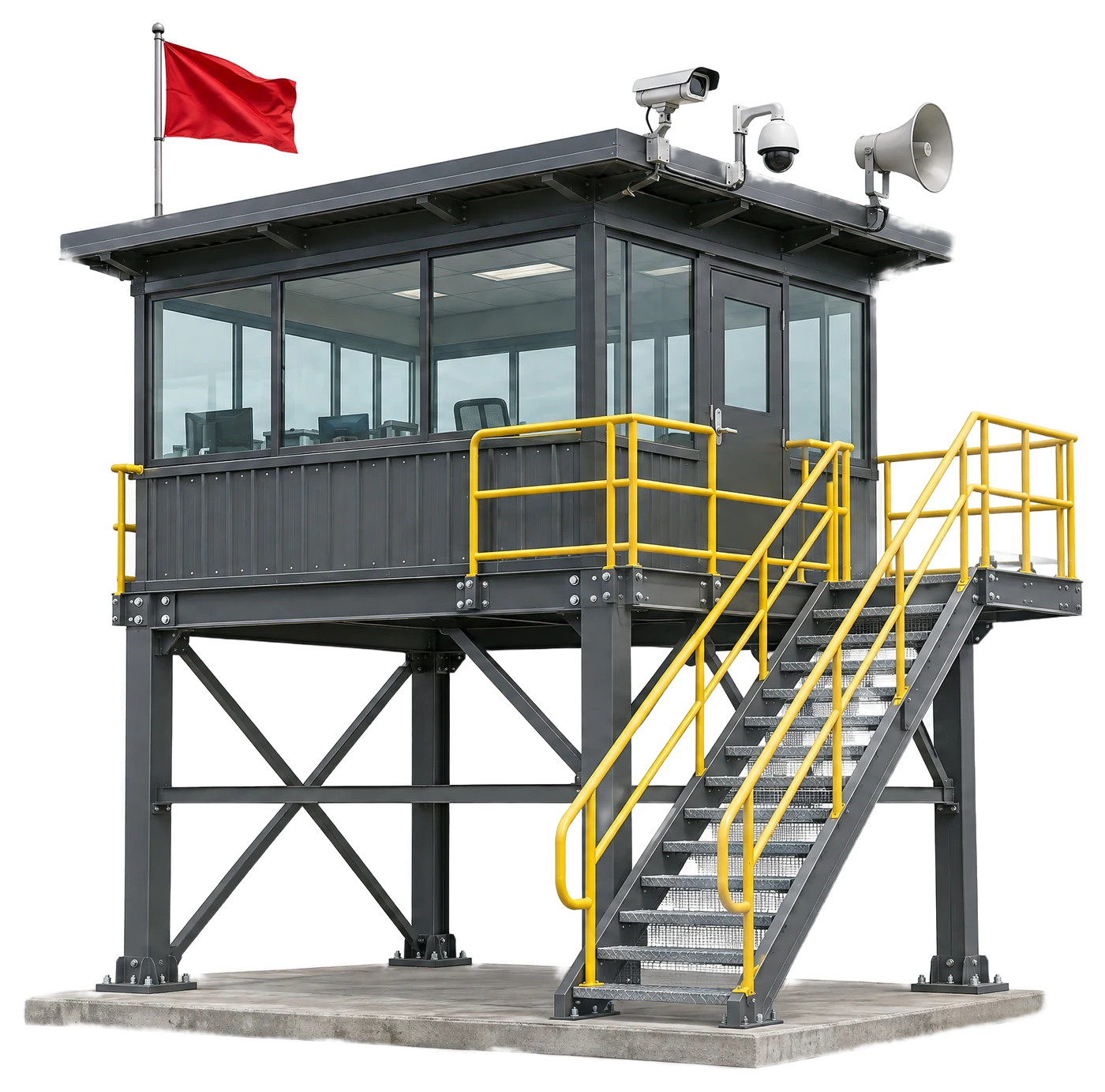
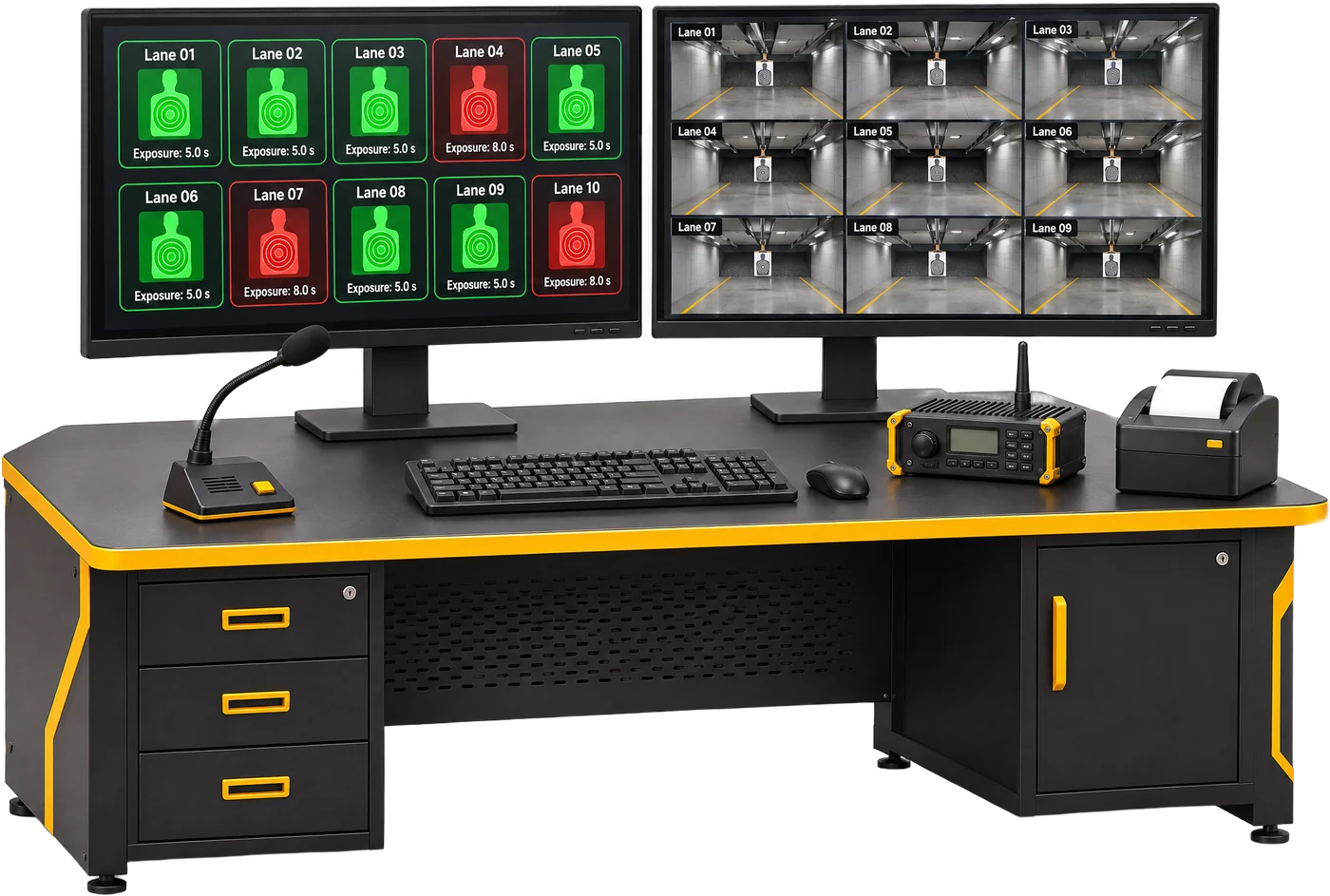
With Range Control & Scoring, one officer sees the live status of every lane and target, sets exposure and hide times, runs saved exercises from a library, and sees every hit displayed, stored and reported by firer. Per-target and dome cameras with recording add safety and a record for review.
Turning, pop-up and moving targets can all run from the same range control, so a range can grow one lane at a time.
What to specify
- Number of lanes, and which practices each lane must run
- Turning sets, single-function or multi-function targets for each lane
- Target faces: Fig 11, Fig 12, Rubia, Hostage A / B or custom
- Hit sensing and how results are stored and reported
- Power and cable routes, and whether existing butts are reused
- Range control, CCTV and operator training