A jungle lane trains soldiers to see first and react fast in close country. Trainees move along a real trail through the forest and engage targets that appear among the trees. This explainer walks through the decisions behind a lane, using our reference layout as the example.
What is a jungle lane range?
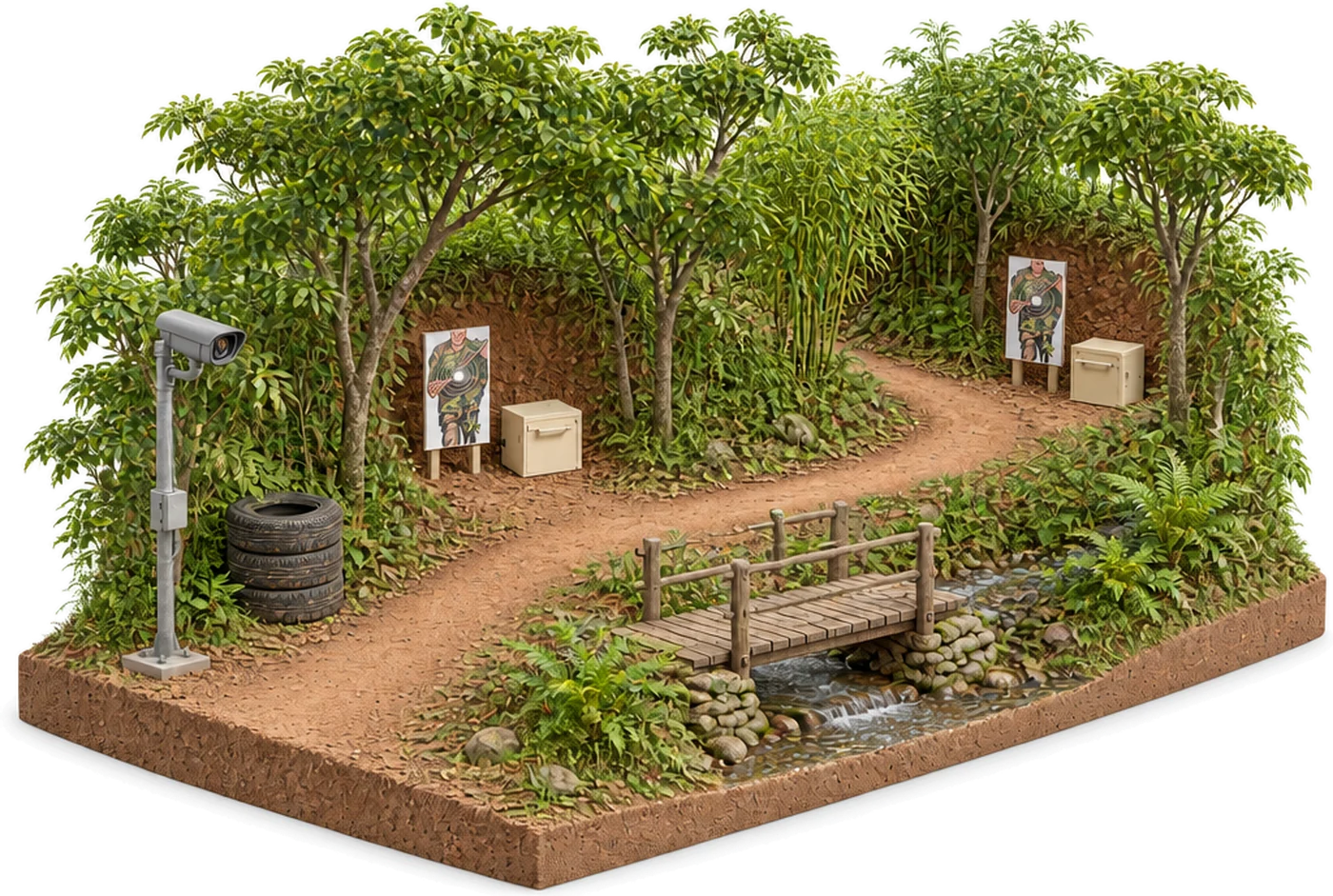
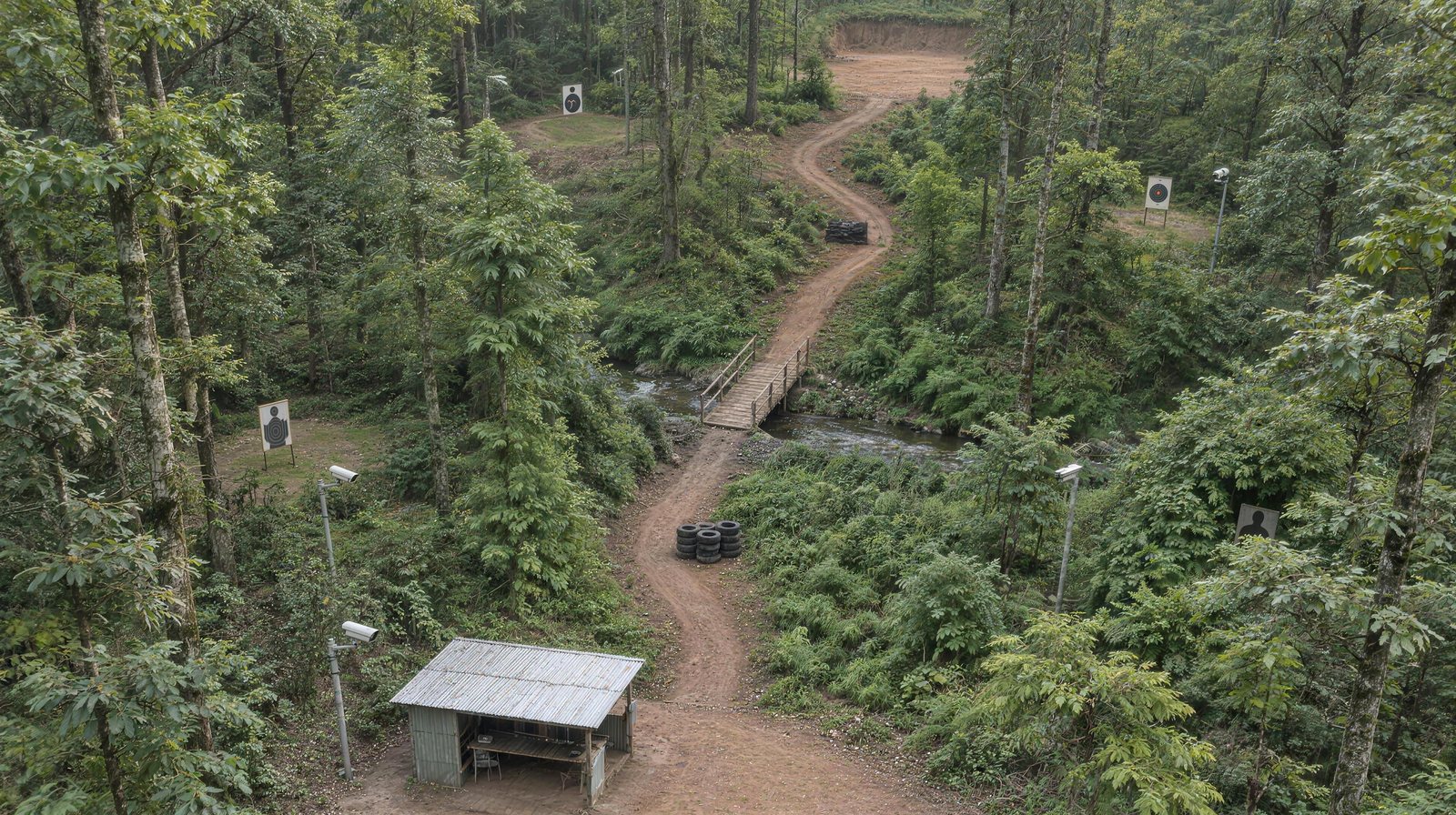
A jungle lane is a live-fire range in a forest. Instead of firing from a fixed point, trainees move along a winding trail from a start point to a finish point. Targets of different types and sizes are hidden in the cover beside the trail and appear without warning, as an enemy would in close country.
Obstacles on the route, such as tyres, a wooden footbridge, a stream crossing and wire, add the strain of movement to every engagement.
How much space does a jungle lane need?
Our reference layout is a lane of about 50 × 120 m. Real lanes follow the ground: the length of the trail, the number of targets and the danger areas your range orders require all set the final size.
Firing directions, stops and danger areas are fixed at the site survey, before any target is placed.
Which targets should a jungle lane have?
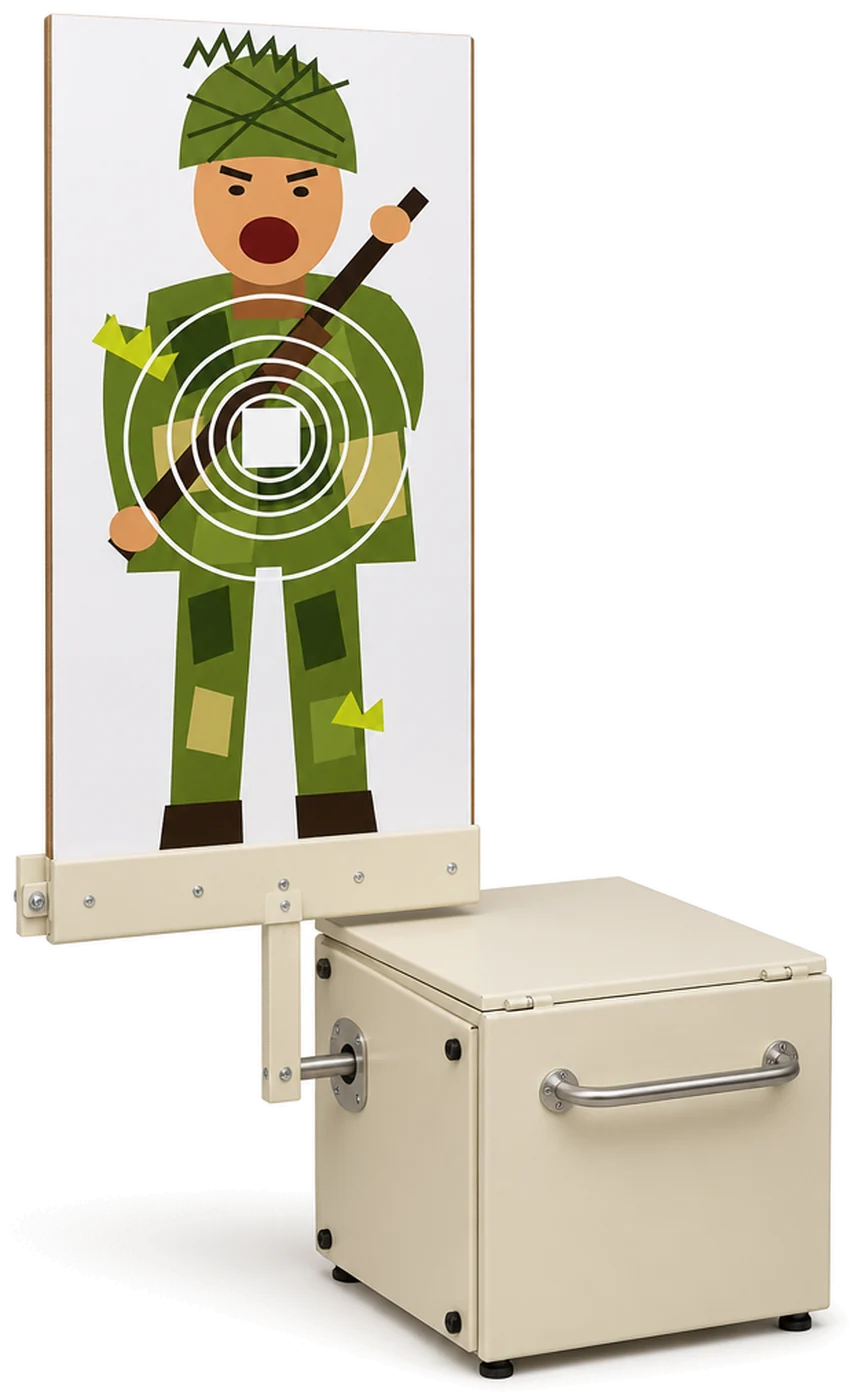
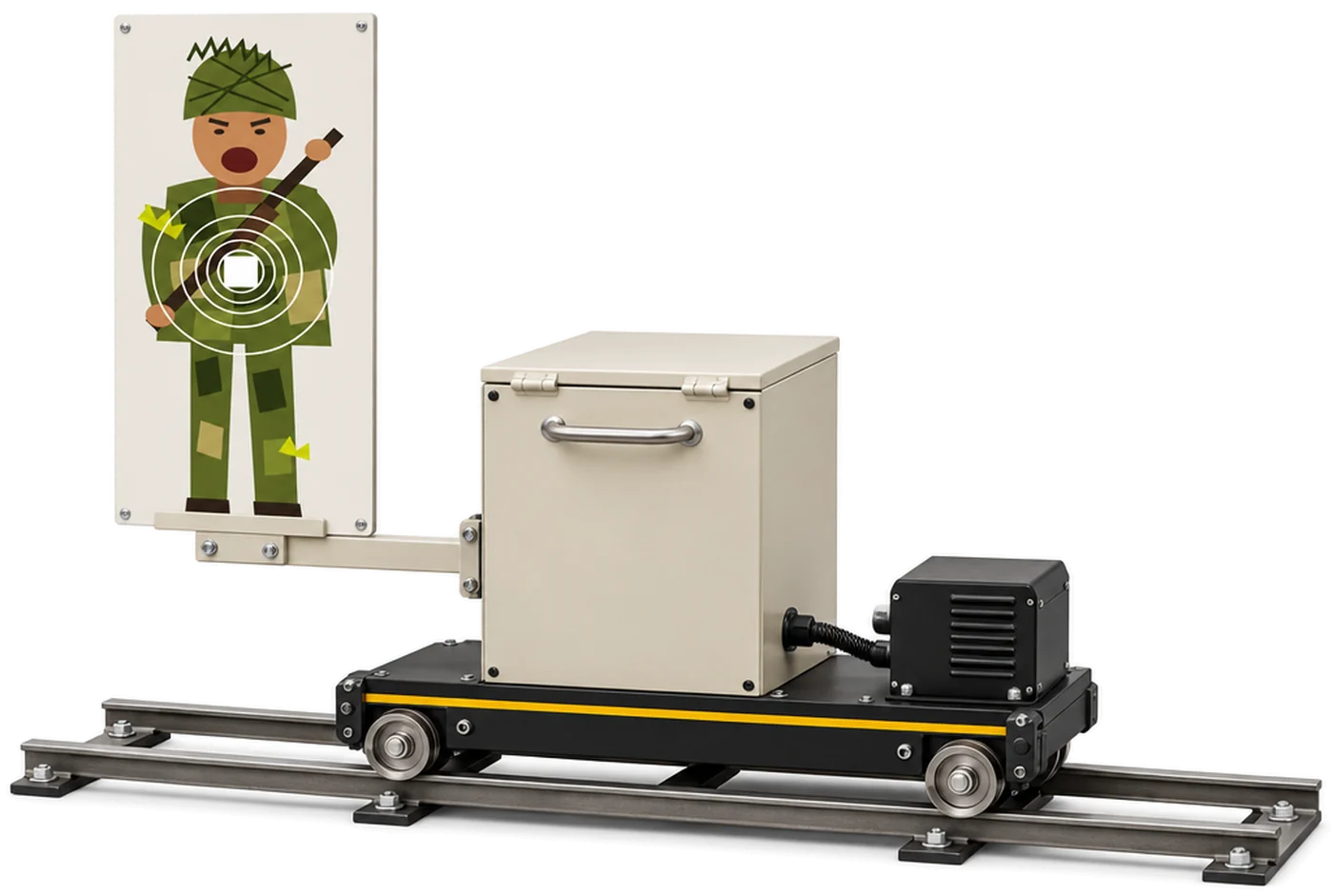
A good lane mixes target types and sizes, so trainees cannot predict what comes next. The reference layout has ten targets of five types:
| Target | What it does | What the trainee faces |
|---|---|---|
| Pop-up | Rises from flat to upright among the trees | A sudden exposure |
| Slicing | Turns from edge-on to face-on | A brief exposure as the face turns |
| Up-and-down | Rises and falls vertically behind cover | A figure appearing from behind cover |
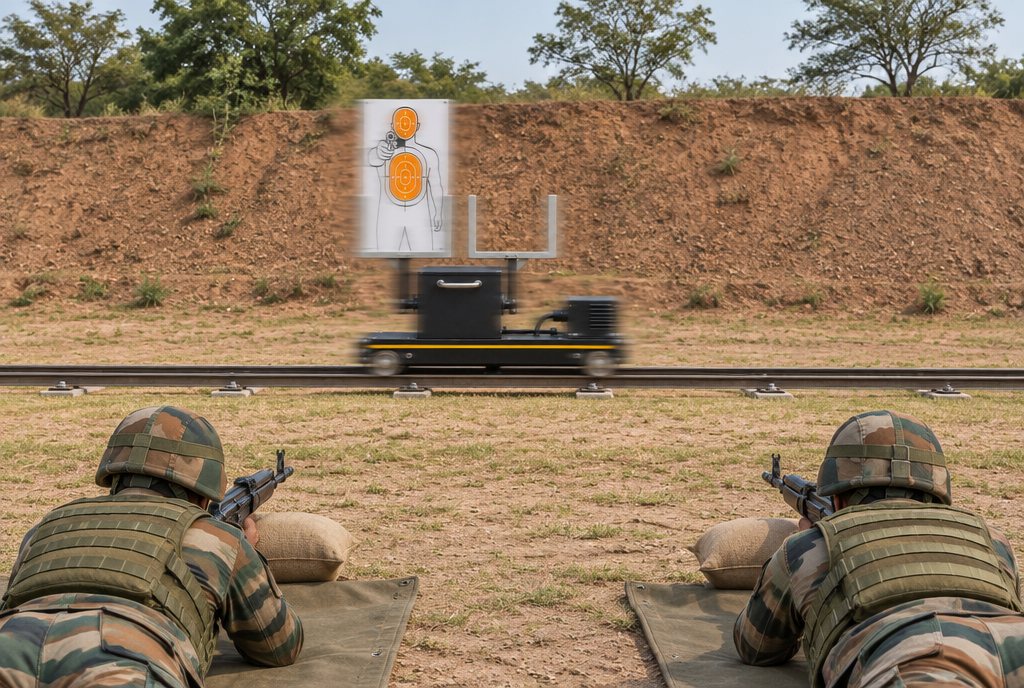
| Moving | Crosses on a track | A target on the move |
| Turning | Turns face-on in the undergrowth | A face that appears edge-first |
The instructor can raise any target at any moment, so every run is different.
How far should targets be from the route?
In the reference layout trainees engage at 30–60 m from the route. Place each target where the trainee will see it only at the last moment, and where its fire lane is clear of the route and of the other engagement areas.
How is a jungle lane kept safe?
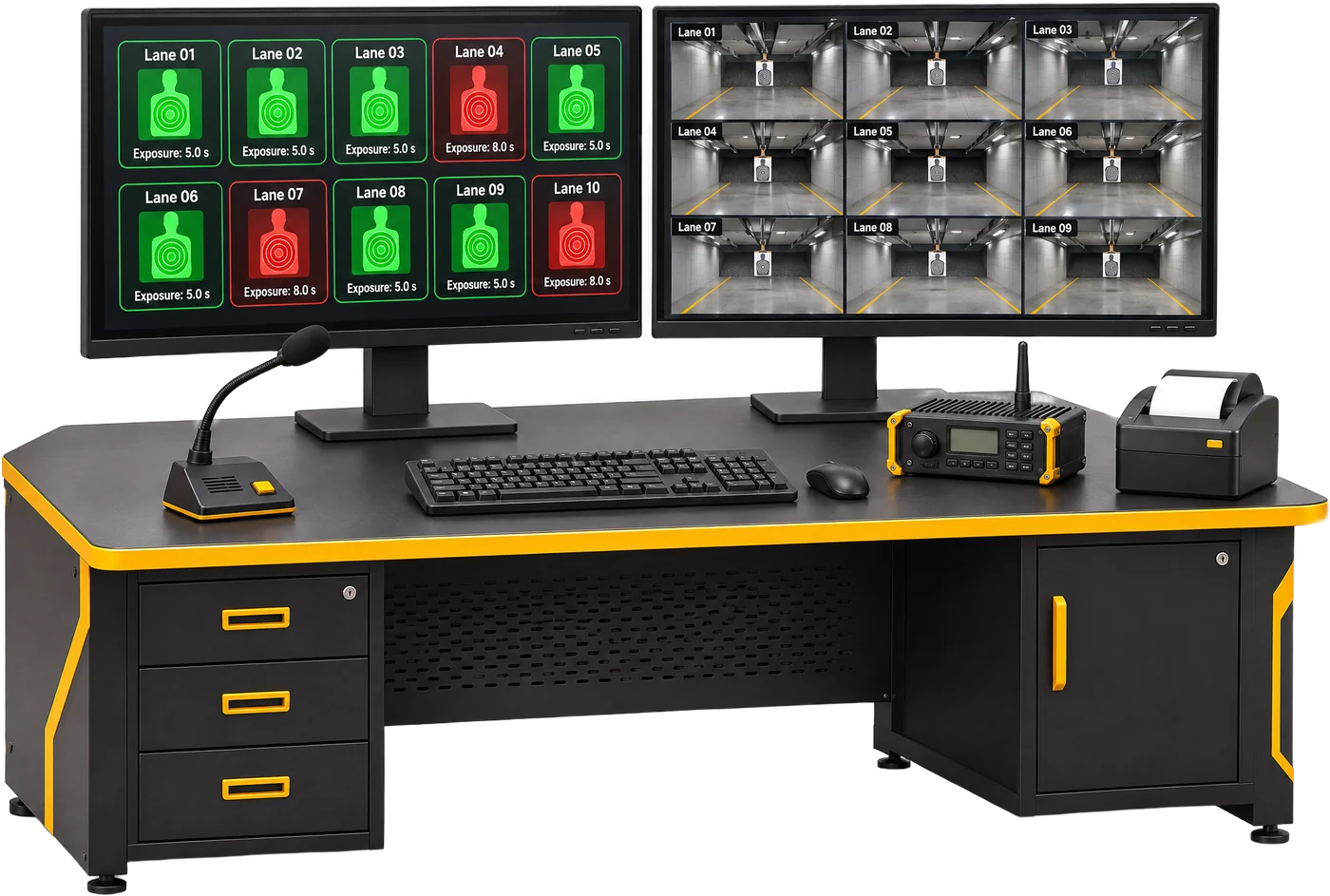
- CCTV on every engagement area: six cameras in the reference layout, watched from the control station.
- One control station at the start point, with target control and CCTV monitoring together.
- Instructor control of every exposure: no target rises unless the instructor raises it.
- Danger areas fixed at the survey, and your own range safety orders followed on every run.
How are trainees assessed?
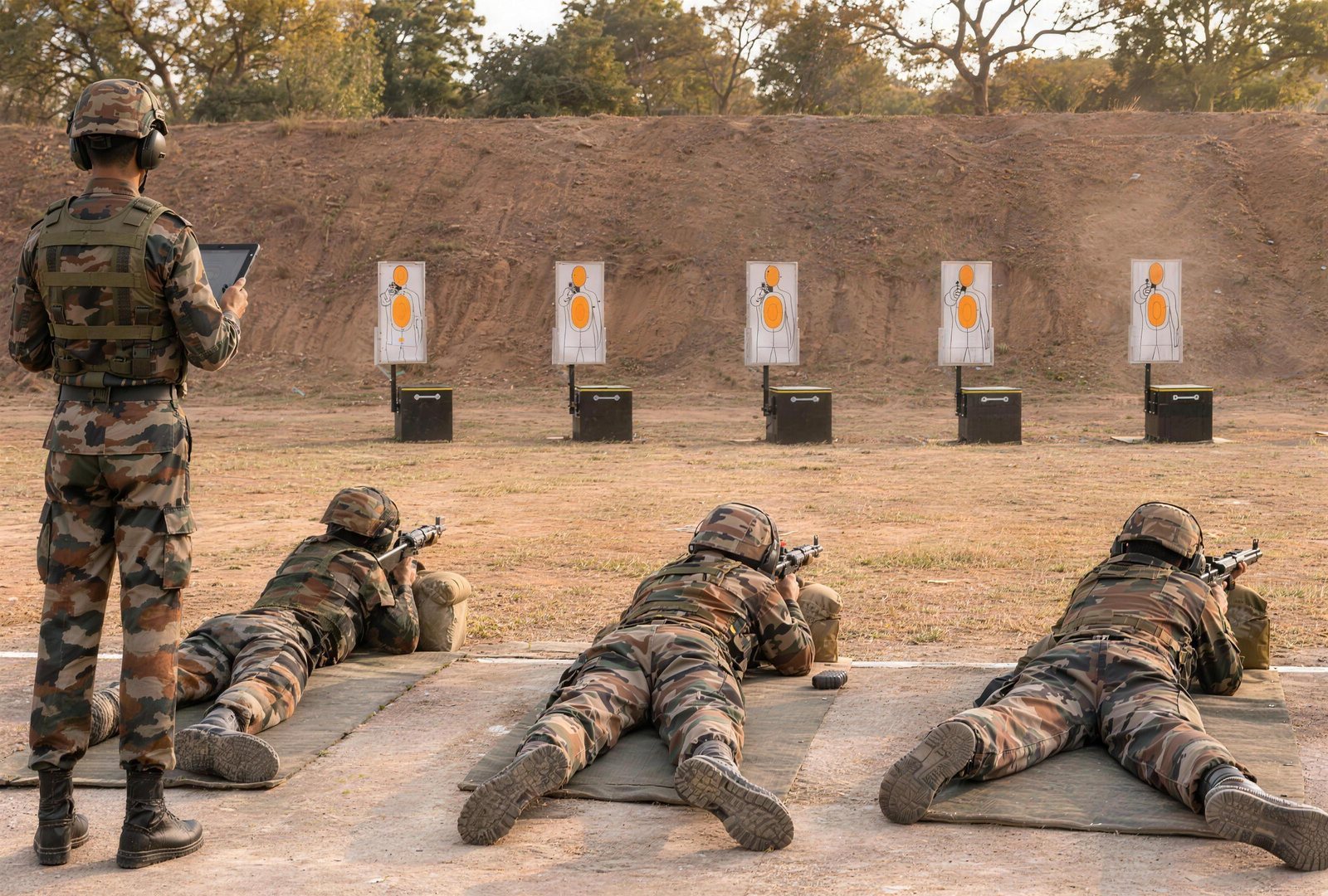
The cameras record every engagement for an honest after-action review, and targets fitted with acoustic hit sensors count hits. Because the instructor changes the order and timing of exposures, a repeat run tests reactions rather than memory.
We deliver the lane end to end: site survey, layout, installation, cabling and instructor training.