Some jobs need a camera overhead for a whole shift, not an hour: guarding a camp, watching a crowd, covering an incident or protecting a plant. A free-flying drone is limited by its battery or fuel. A tethered drone takes its power from the ground instead, and trades range for time on station.
How does a tethered drone work?
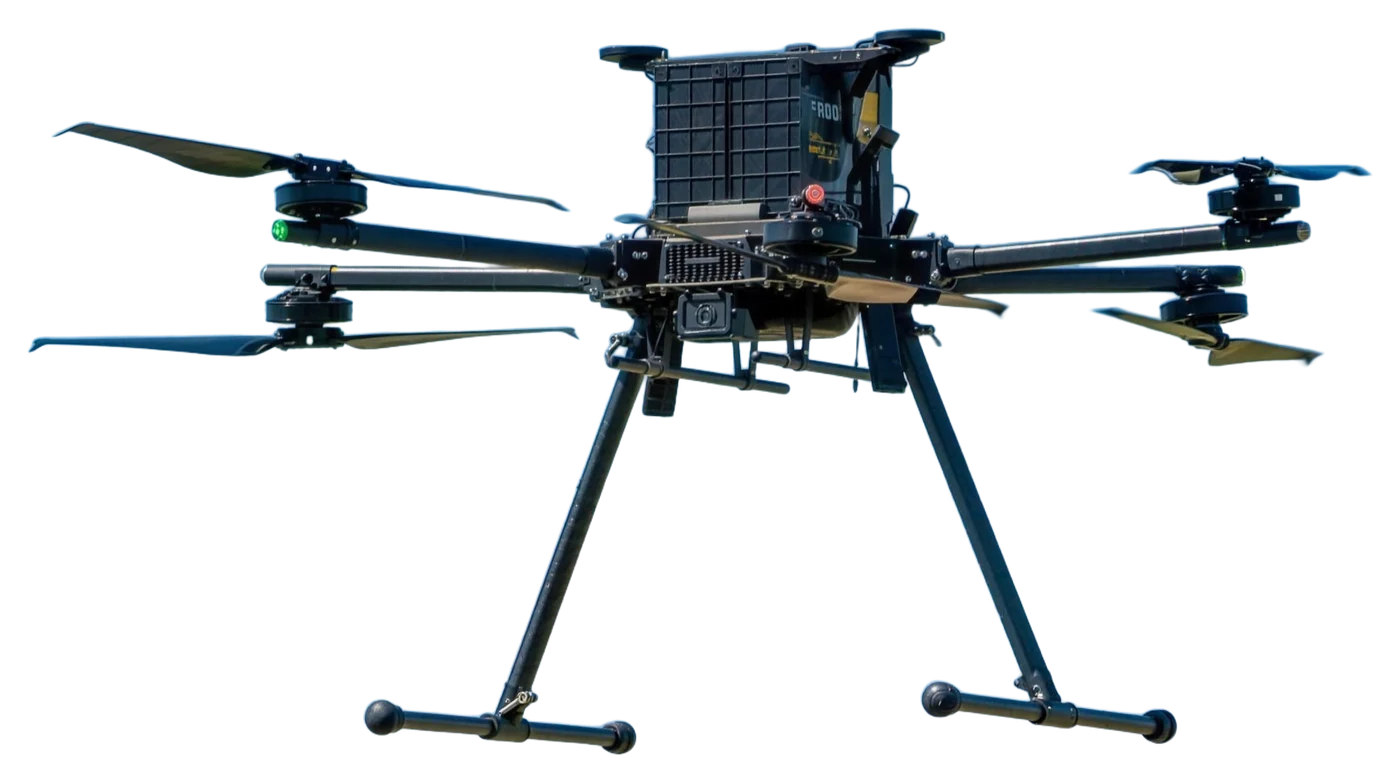
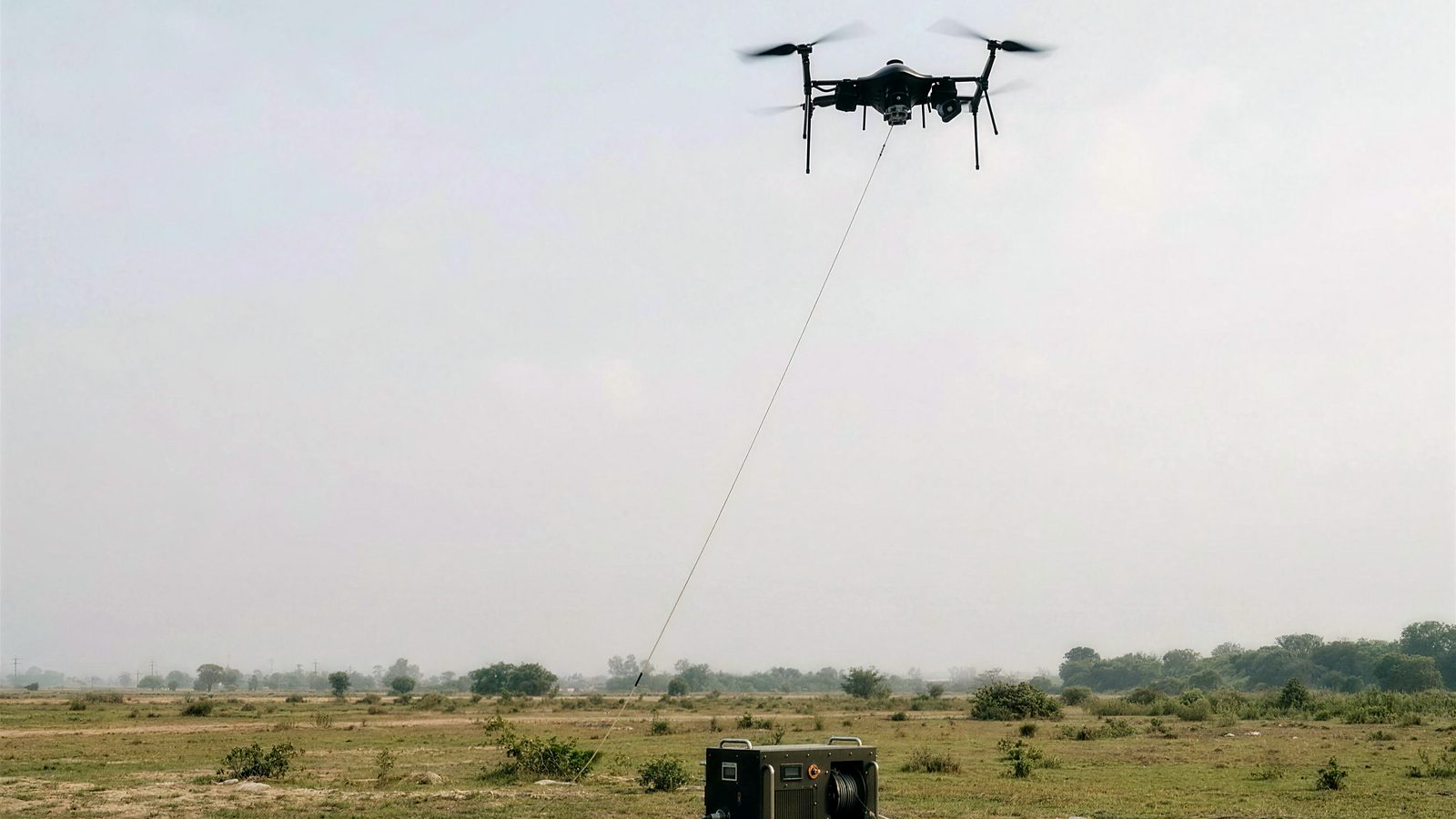
The aircraft is connected to a base station on the ground by a tether that carries both power and data. On the Tethered Surveillance UAV, the 150 m tether carries 3 kW of power and a fibre-optic data link, and a motorised winch pays it out and reels it in automatically.
Because the power comes from the ground, endurance is set by the ground supply, not a battery: 12 hours or more. Because the data runs over fibre, there are no radio emissions while it is tethered.
Two people can transport and set up the system in under 15 minutes. If ground power fails, an on-board reserve keeps the aircraft flying for 30 minutes or more. When the mission moves, the operator releases the tether in the air and the drone flies on by itself.
Tethered, multicopter or VTOL?
| Tethered UAV | Free-flying multicopter | Hybrid VTOL | |
|---|---|---|---|
| Time aloft | 12+ h on ground power | 60 min on the MQ-750 MKIII | 60–120+ min at full payload on the Hybrid VTOL |
| Movement | Over the base station; free flight for 35+ min within 2 km | Moves freely; 10 km range on the MQ-750 MKIII | Long routes; 5–30 km link on the Hybrid VTOL |
| Height | 120+ m AGL on a 150 m tether | Flown to the task | 500–1,500 m AGL tactical altitude |
| Link | Fibre optic, no RF, while tethered | Radio link | Encrypted radio link, AES-128 / AES-256 |
| Best for | Bases, events, incidents, critical sites | Checkpoints, cordons, quick looks | Long patrols from posts with no runway |
When is a tethered drone the right choice?
- Overwatch for a whole shift above one place, such as a camp, a border post or a plant.
- Sites where radio emissions must be kept down: the tethered link is fibre optic, with no RF.
- Event and crowd security: 12+ hours above a crowd, with a public-address payload.
- Incident command: an aerial view for responders at fires, accidents and rescues, rigged in under 15 minutes.
- Critical-site protection: round-the-clock watch over refineries, ports and power plants on ground power.
Its EO/IR camera has 30× day zoom and a 640 × 480 thermal channel, and detects human-sized targets at 1,500 m by day and 700 m at night.
When should you choose a free-flying drone?
Choose a free-flying drone when the area of interest is more than a short distance from where you can set up, or when the task moves: route patrols, convoy overwatch, search, or a quick look over the next ridge.
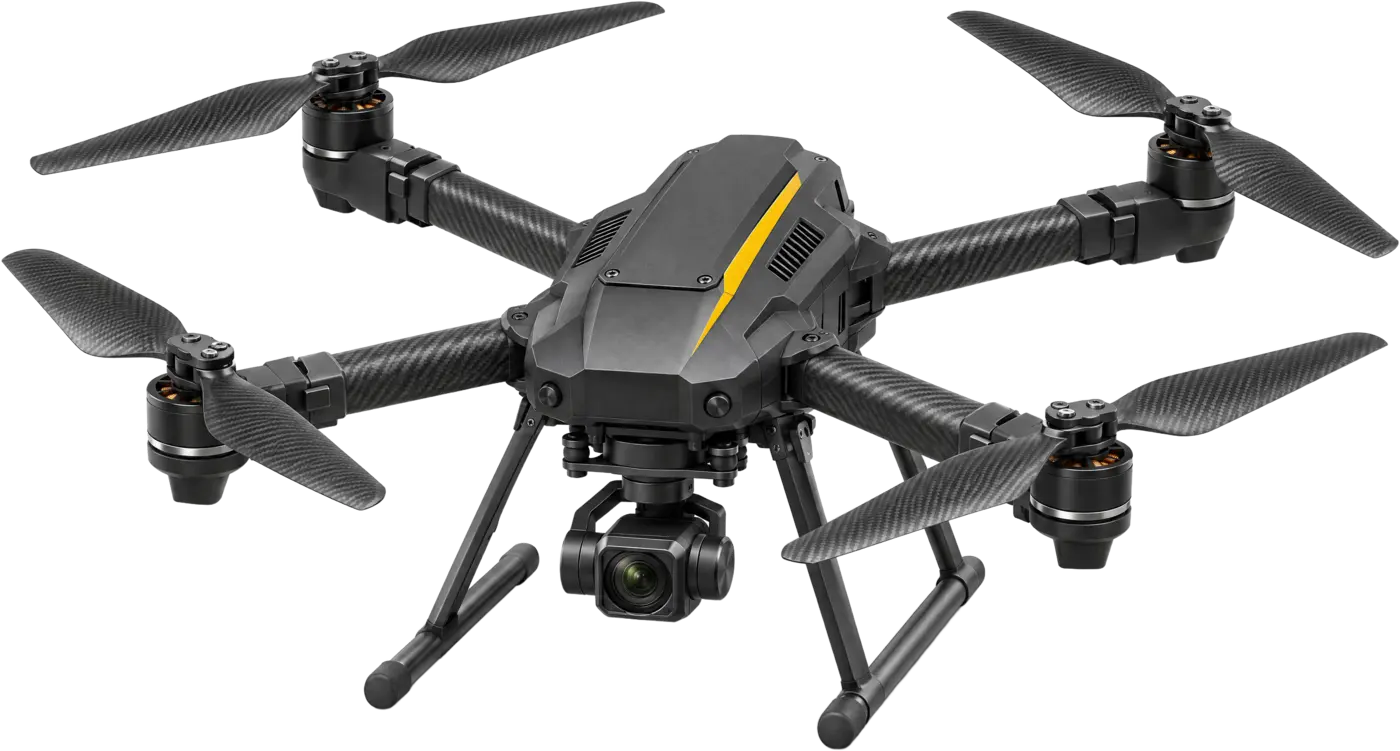
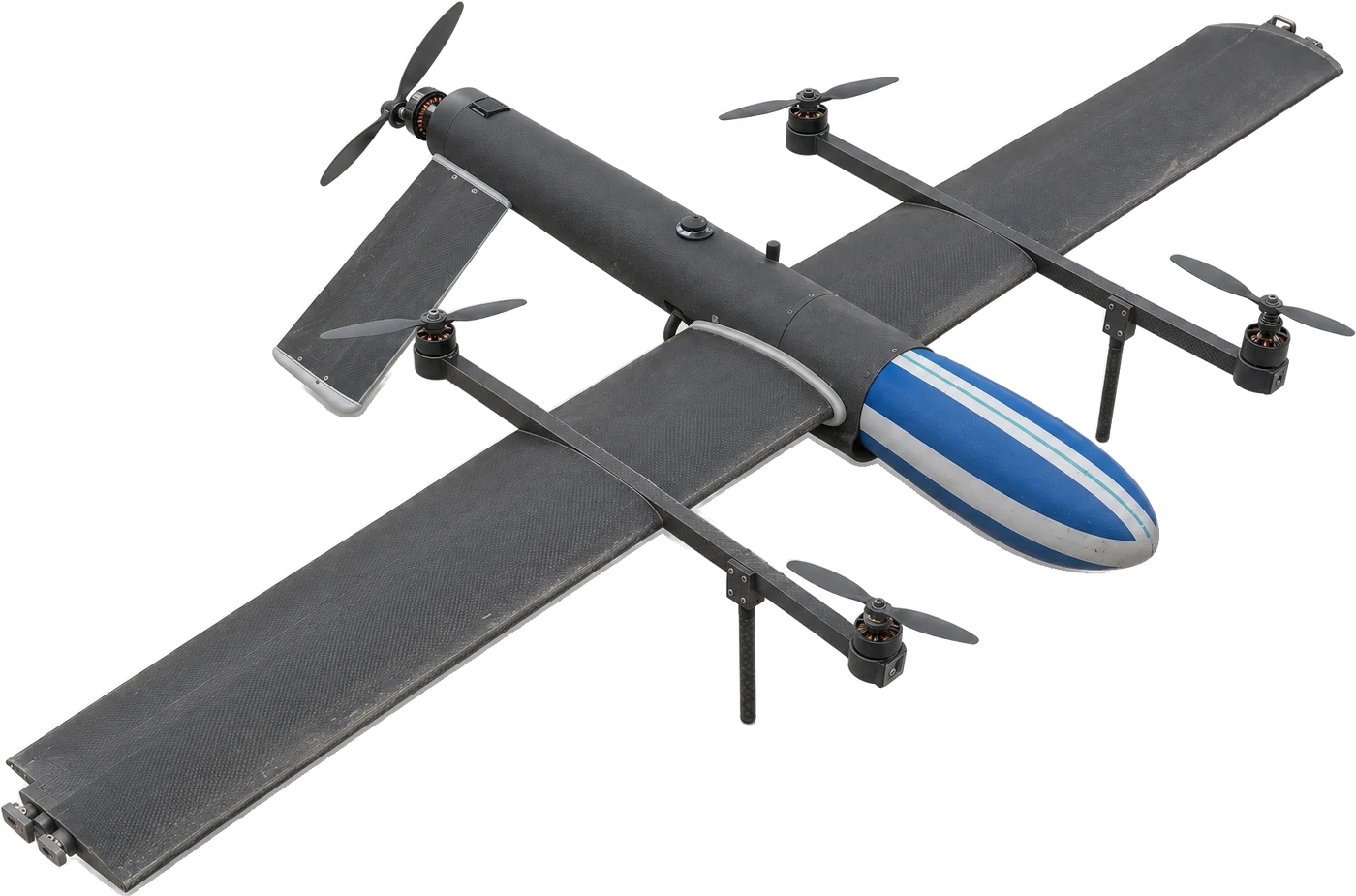
The MQ-750 MKIII gives an hour above a checkpoint or cordon up to 10 km from launch. The MQ-JR is designed to be jammer-resistant, with an AES-256 encrypted link. For long patrols from posts with no runway, a hybrid VTOL such as the Hybrid VTOL or CONV V5 cruises on its wing. See VTOL vs fixed-wing vs multicopter.
Many sites use both: a tethered drone for the fixed watch, and a free-flying drone to go and look at whatever it spots.
What to specify for a tethered drone
- Tethered endurance and working height above ground
- Tether length, power output and how the winch manages the tether
- Link type while tethered (fibre or radio) and the free-flight fallback
- Sensors: day zoom, thermal resolution and detection ranges by day and night
- Wind and temperature limits (on ours: 35 km/h sustained, 50 km/h gusts, and −10 °C to +55 °C)
- Behaviour on power or link loss: backup time aloft and return-to-home
- Set-up time, crew size and base-station weight